

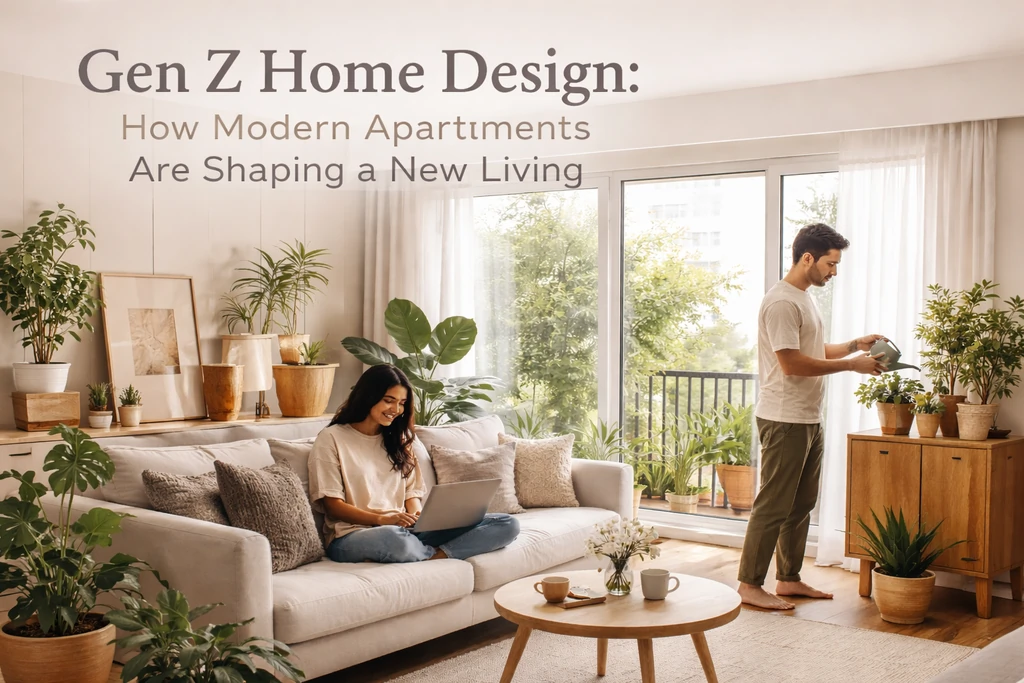
Gen Z home design illustrates a change in the way young people think about living spaces. For a generation that grew up online, the home is not just a place to live. It's a reflection of daily life, video calls, short clips, and quiet moments offline. Gen Z looks for spaces that work well beyond the screen.
Across Indian cities, young buyers and renters are clear about what they want. They value comfort, flexibility, and visual balance. They want homes that feel calm but not boring, expressive but not crowded. This balance is shaping how contemporary apartment layout is evolving, especially in urban spaces where size is limited and lifestyles move fast.
1. Homes as personal spaces
Unlike earlier generations, Gen Z doesn't design homes to impress guests. Their focus lies in daily use. A home should feel good to wake up in, work from, and relax in at night; visual appeal matters, but only when it supports comfort.
This is why open layouts are popular. Living rooms often merge into dining or work areas without strong barriers. The space feels larger and more relaxed. Furniture is chosen for use first, looks second. A couch should be comfortable enough for long hours.
In many aesthetic homes in India today, you will notice this shift. The styling looks clean and intentional, but nothing feels planned. The goal is to make the home livable, not perfect.
Read: Space-Saving Interior Design Ideas for Comfortable Compact Homes
2. Natural light and neutral tones
Light plays a major role in Gen Z home layouts. Bright, airy spaces feel better on camera, but they also improve mood and focus. Large windows, sheer curtains, and light wall colors are common choices.
Why Neutral Palettes Work in Small Apartments
Neutral tones dominate. Whites, off-whites, soft greys, and beige create a calm base. These shades work well in small apartments and make rooms feel open. They also allow personal items to stand out without overwhelming the space.
This preference aligns closely with minimalist interiors. The idea is not to remove warmth but to reduce visual noise. A neutral base gives flexibility. You can add color through cushions, art, plants, or rugs and change them over time without redoing the whole home.
3. Minimalism with purpose
Minimalism for Gen Z is about owning things that matter; this approach is reflected clearly in interior choices. Storage is hidden wherever possible. Wardrobes have clean fronts. Kitchen cabinets avoid heavy finishes. Shelves are used only to display books, records, or small decor items that reflect personal taste.
Balancing Simplicity and Warmth
Walls are rarely overcrowded. One framed print, a mirror, or a simple wall lamp is often enough. This restraint makes each element feel more intentional.
In modern apartment design, this also helps manage space better. Smaller homes feel less cramped when there is room to breathe visually. Minimalist interiors support this without making the home feel empty.
Gen Z Home Design: How Modern Apartments Are Shaping a New Living
4. Flexible Spaces for Changing Routines
Gen Z lifestyles are changing; work hours vary, and hobbies change. Many young people work from home at least once a week. This makes fixed-purpose rooms feel limiting.
Work-From-Home Corners in Urban Apartments
Homes now feature flexible corners instead of fixed setups. A dining table may double as a workspace. A bedroom corner might hold a reading chair today and a workout mat tomorrow. Furniture that is easy to move or repurpose is preferred.
Foldable tables, stackable chairs, and modular sofas are popular for this reason. They adapt as routines change. This flexibility is a key part of Gen Z home design and one reason why overly formal layouts are falling out of favor.
Read: Work From Home: Smart Home Office Designs 2026
5. Technology that Blends In
Gen Z expects technology to be present but not obvious. Smart lighting, charging points, and good internet connectivity are basic needs. However, visible wires and bulky devices are avoided.
Clean walls, invisible wiring, and simple fixtures help technology blend into the background. Lighting is layered rather than harsh. Warm lights are used in living and sleeping areas, while brighter lights are kept for kitchens and work zones.
This combination supports comfort and aesthetics. The home looks calm, but it works efficiently. Many aesthetic homes in India follow this approach, especially in new apartments designed for younger buyers.
6. Sustainable choices, even in small ways
Sustainability matters to Gen Z, though it often shows up in practical, everyday choices rather than big statements. They may not redesign an entire home to be eco-friendly, but they prioritize materials and usage.
Buying less, choosing better
Indoor plants are common, not just for looks but for a sense of freshness. Natural fabrics like cotton and linen are preferred for curtains and bedding. Reusable storage, durable furniture, and locally made decor are valued.
In minimalist designs, this mindset fits naturally. Buying fewer, better-quality items reduces waste and clutter. It also aligns with budget awareness, which remains important for young homeowners and renters.
7. Local influence with global exposure
Gen Z in India draws inspiration from global trends, but they adapt them to local living. You might see Scandinavian-style furniture paired with Indian textiles. A modern sofa may sit beside a handmade rug or a family heirloom.
This mix makes homes feel rooted rather than generic. It also keeps spaces warm and personal. Modern apartment design today often allows for this blend by offering neutral shells that residents can customize.
This approach reflects confidence. Gen Z does not feel the need to choose between traditional and modern. They combine what feels right for their life.
8. Instagram-friendly, but lived-in
Yes, Gen Z cares about how homes look on social media. Clean lines, good lighting, and balanced colors photograph well. But the intention is not a constant display.
Homes are designed to be lived in first. A slightly messy bookshelf, a coffee mug on the table, or a throw blanket left on the couch is acceptable. These details make spaces feel real.
This honesty sets Gen Z home design apart. The goal is not perfection, but comfort that happens to look good.
Read: Why Gen Z Prefers Instagrammable Homes Over Vastu-Compliant Ones
The bigger picture
Gen Z is redefining what a modern home means. They are practical, visually aware, and thoughtful in their choices. They want spaces that support daily life, mental well-being, and self-expression without excess.
Contemporary design for apartments is responding to this shift through flexible layouts, neutral palettes, and smarter use of space. Aesthetic homes in India are becoming simpler, calmer, and more personal as a result.
Modern interiors play a strong role as a way to manage space and focus on what matters. Together, these elements create homes that feel current without trying too hard.
Overall, Gen Z wants homes that grow with them. Spaces that feel easy to live in today and are adaptable for tomorrow. Instagram may capture the look, but the real value lies in how these homes support everyday life.
Posted By

Saria George
info@houssed.com
Saria George is a home décor writer at Houssed who focuses on interior design, décor trends, furniture, and practical ideas for modern living spaces. Her work highlights simple design choices that balance comfort, functionality, and aesthetics.