

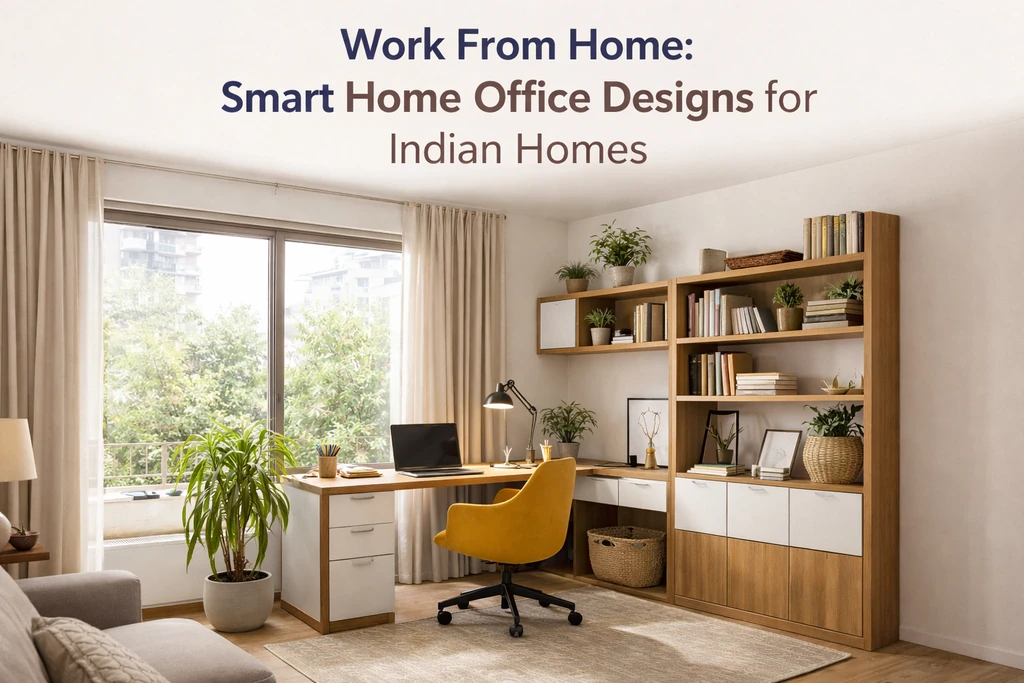
Working from home is no longer a short-term adjustment. For many Indian professionals, it has become a regular part of daily life. This shift has changed how we view our homes and the sort of home office designs we now need. A dining table corner or a sofa with a laptop may work for a few days, but over time, it affects focus, posture, and even mood.
A well-planned workspace at home doesn't need a spare room or premium furniture. What it needs is clarity. Clear thinking about how you work, how long you sit, and what helps you stay comfortable, where space is often shared and flexible, makes smart planning even more crucial.
Understanding Your Work Needs First
Before exploring home office ideas, step back and look at your routine. Do you spend most of the day on video calls, or is your work more task-based and quiet? Do you need space for files, or is everything digital? These answers define your work-from-home setup beyond any design trend.
Some people need a calm, closed space. Others work well in a semi-open area where they still feel connected to the home. There's no single approach for home office interior design. The idea is to support how you work, not create a layout that looks good but feels uncomfortable.
Choosing the Right Spot in an Indian Home
In apartments and compact houses, finding space can be challenging. Still, most homes have underused corners. Window space, a part of the bedroom, or even a wider corridor, can be converted into a practical workspace.
Natural light is a big advantage. By placing a desk close to a window, you can reduce eye strain and avoid a feeling of being crowded. If this isn't possible, good artificial lighting becomes essential. Avoid working directly under harsh ceiling lights. A table lamp with soft but focused rays works better.
Noise is another factor. Homes with family members, children, or shared living areas need some form of separation. This doesn't always mean building walls. A tall bookshelf, a sliding panel, or even a curtain can create visual and mental boundaries without major changes.
Furniture That Fits the Space and the Body
When exploring a work-from-home setup, furniture choices are crucial. A chair that supports your back and a desk at the right height can prevent long-term pain.
Compact desks often work better than large tables. Wall-mounted desks or foldable units are useful in smaller rooms. They keep the floor open while making the space feel lighter.
Storage should be simple and reachable. Open shelves, shallow drawers, or vertical cabinets help keep essentials close without crowding the area. Excessive furniture can make a home office feel heavy and distracting.
Read: Modern Living Room Interior Design Ideas for Indian Homes
Balancing Work and Home Life
One of the biggest challenges of working from home is the lack of balance between personal and professional life. Smart home office interior design can help draw that line.
Visually, this can be done through color or material changes. A slightly different wall color behind the desk or a textured panel can signal a shift in purpose. Even a dedicated rug under the chair can mark the workspace.
At the end of the day, the ability to step away matters. If your home office setup can be closed, folded, or visually softened after work hours, it helps the mind switch off. This balance is more important in homes where the office shares space with a bedroom or living area.
Technology and Practical Details
A good work-from-home setup goes beyond furniture. PowerPoints, internet stability, and cable management are often ignored but affect daily comfort.
Plan for enough plug points near the desk. Extension cords running across the room are not just messy but also unsafe. Simple cable trays or clips can keep wires organized and out of sight.
Internet routers should be placed where the signal is strong. If video calls are part of your routine, test the connection from your chosen workspace before finalizing it.
Read: Luxury Interior Design Trends for Premium Apartments in 2026
Making the Space Feel Personal
While functionality comes first, personal touches make the space easier to spend time in. A plant, a framed photo, or a small piece of art can make the area feel less rigid. One or two elements are often enough.
Indian homes already have strong character. The key is not to overload the workspace with decor. Keep it calm, tidy, and personal
Home Office Ideas for Different Home Types
In a compact apartment, a bedroom corner often becomes the office. Here, keeping the design light helps. Neutral colors, slim furniture, and minimal storage work well.
In larger homes, a dedicated study room offers more freedom. Even then, the focus should stay on comfort and usability rather than filling the room with furniture.
For homes with multiple people working or studying, shared workspaces can be planned. Long tables with defined zones or separate desks facing different directions allow privacy without full separation.
Read: Space-Saving Interior Design Ideas for Compact Homes
Adapting Over Time
One thing many people realize after a few months is that their needs change. What worked initially may start to feel limiting. That is normal. Good home office designs allow small changes over time.
A chair upgrade, a monitor stand, or better lighting can make a noticeable difference. Think of your home office as a living space, not a fixed setup.
Final Thoughts
Working from home has reshaped daily routines across India. As this way of working continues, the importance of thoughtful home office interior design becomes clearer. It is not about copying images from the internet or following strict rules. It is about understanding your space, your work, and your comfort.
Smart home office ideas focus on practicality, balance, and ease. When done right, a home office supports productivity without taking over the home. It fits into daily life, making work feel manageable and focused, even within the familiar walls of your own house.
Posted By

Akshay Gupta
info@houssed.com
Akshay Gupta writes about lifestyle and modern living for Houssed, focusing on practical décor ideas and everyday comfort. His work offers simple guidance to help readers create functional and welcoming home environments.