

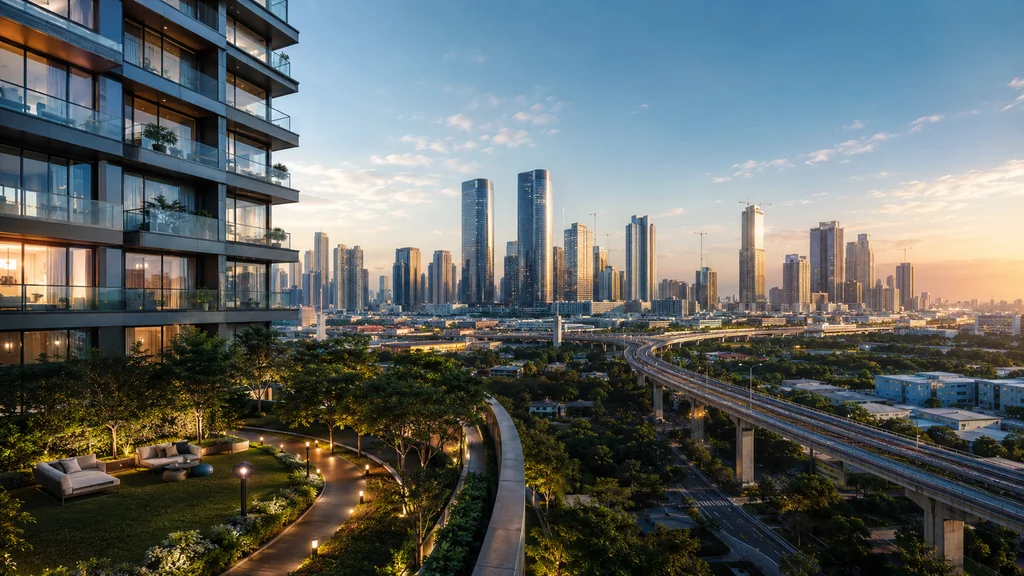
The top real estate trends shaping today’s property market reflect changing buyer expectations, evolving work patterns, infrastructure expansion, and new investment strategies. Over the years, the real estate sector has moved beyond a simple process of buying and selling property. It now adapts to lifestyle changes, economic shifts, and technological transformation.
Across major areas in India and global markets, developers and investors are adapting to these forces. Residential demand patterns have shifted, commercial spaces are evolving to support flexible workplaces, and investment strategies are becoming more data-driven. Together, these changes are redefining how property markets function and where future growth will emerge.
Rising Demand for Premium and Lifestyle Housing
One of the most visible residential real estate trends today is the increasing demand for premium housing. Buyers are no longer looking only for basic living spaces. Instead, they prefer homes that offer lifestyle value, such as wellness amenities, green spaces, and advanced security systems.
The demand for larger homes and higher living standards among high-net-worth individuals and upwardly moving professionals has led to a rapid growth in the luxury housing market in India. As demand for high-end properties increases, analysts predict that home prices in major cities will keep rising.
Developers have responded by launching projects with smart home technology, support services, private clubs, and resort-style facilities. In metropolitan areas such as Mumbai, Bengaluru, and Delhi NCR, these developments are redefining urban living.
Branded homes are another new idea in high-end housing. These projects offer a balance of comfort and prestige that appeals to wealthy buyers by fusing luxury residences with hospitality services and internationally renowned brands.
This shift toward lifestyle-driven housing is likely to remain one of the most influential top real estate trends in the coming years.
Infrastructure-Driven Property Growth
Infrastructure development continues to be one of the strongest drivers of real estate expansion. New highways, metro lines, airports, and business districts often trigger rapid growth in nearby property markets.
Improved connectivity reduces travel time and makes previously distant locations more attractive for both homebuyers and businesses. As a result, micro markets located along infrastructure corridors frequently experience strong price appreciation and increased investor interest.
Many cities across India are witnessing this phenomenon. Areas surrounding expressways, transit hubs, and upcoming airports are transforming into new residential and commercial centers. Once infrastructure projects are completed, demand for housing, retail spaces, and offices tends to rise sharply.
This pattern illustrates how urban development and real estate growth are closely linked. Infrastructure expansion will continue to shape property values and development patterns across major urban regions.
Evolution of Commercial Workspaces
Another significant shift in commercial real estate trends is the transformation of workplace environments. The pandemic accelerated the adoption of hybrid and flexible work models, forcing companies to rethink how office space is used.
The commercial sector has proven stability despite some predictions of a drop in office demand. Due to the expansion of global capability centers, financial services companies, and technology companies, office leasing activity in India has been strong in recent years.
However, the nature of office space has changed. Businesses now prefer flexible layouts, collaborative areas, and modern amenities that improve employee experience. Co-working spaces and managed offices have also grown in popularity because they allow companies to scale operations without long-term commitments.
Developers are responding by designing commercial buildings that offer shared amenities, wellness features, and advanced digital infrastructure. These innovations are redefining how workplaces function and making commercial real estate more adaptable to future business needs.
Growth of Data Centres and New Asset Classes
The digital economy has created demand for new types of real estate assets. Data centers, logistics parks, and warehousing facilities are among the fastest-growing segments in the industry.
As artificial intelligence, cloud computing, and online services expand, companies require large facilities to store and process massive amounts of data. Global real estate investors have identified data centers as one of the most promising investment sectors due to strong demand and long-term revenue potential.
Similarly, the growth of e-commerce has increased the need for logistics hubs and warehouses located close to urban markets. These facilities support fast delivery networks and efficient supply chains.
The emergence of these specialized assets illustrates how technological change can reshape property markets. Investors who once focused mainly on residential and office buildings are now exploring a wider range of opportunities.
Increasing Institutional Investment
Institutional capital is playing a larger role in real estate markets than ever before. Global investment funds, real estate investment trusts, and private equity firms are actively acquiring and developing large-scale property assets.
Several factors explain this trend. Real estate offers relatively stable returns compared with more volatile asset classes. In addition, growing urban populations and economic expansion continue to create long-term demand for property.
As institutional investors enter the market, development projects are becoming larger and more professionally managed. This trend also encourages greater transparency, improved governance, and higher construction standards.
For investors, these changes represent important property investment trends that are shaping the future of the sector. Institutional participation not only increases liquidity but also strengthens the overall stability of the real estate market.
Sustainability and Green Development
Environmental awareness has become an important consideration in modern property development. Buyers and tenants increasingly prefer buildings that reduce energy consumption and minimize environmental impact.
Developers are responding by incorporating sustainable design elements such as solar panels, rainwater harvesting systems, and energy-efficient materials. Green building certifications are also gaining popularity as they signal environmental responsibility and long-term cost savings.
Sustainability is no longer viewed as a niche concept. Instead, it has become an essential part of responsible real estate development. As environmental regulations tighten and consumer awareness grows, green buildings will likely become the standard across both residential and commercial sectors.
Technology Transforming the Property Market
Technology is rapidly changing how properties are bought, sold, and managed. Digital platforms now allow buyers to explore listings, compare prices, and complete transactions with greater transparency.
Artificial intelligence and data analytics are also influencing property investment trends by helping investors identify emerging markets and evaluate potential returns. Virtual tours, digital documentation, and online property management systems are making real estate transactions faster and more efficient.
These innovations are improving market accessibility and enabling a wider range of participants to invest in property.
Also Read: Smart Home Technology in Luxury Properties
The modern property market is shaped by multiple forces ranging from lifestyle changes and infrastructure expansion to technology and institutional investment. These top real estate trends reveal how the industry is evolving in response to economic growth, urban development, and changing buyer expectations.
From premium residential communities to flexible office environments and digital infrastructure assets, the real estate sector is becoming more diverse and dynamic. As cities expand and new technologies emerge, the top real estate trends will continue to influence where people live, work, and invest in the years ahead.
Posted By

Ruchi Mane
info@houssed.com
Ruchi Mane is the Senior Editor at Houssed, leading the platform’s real estate news coverage. She tracks trends in India’s luxury property market while overseeing editorial strategy, PR outreach, and social media communication.