

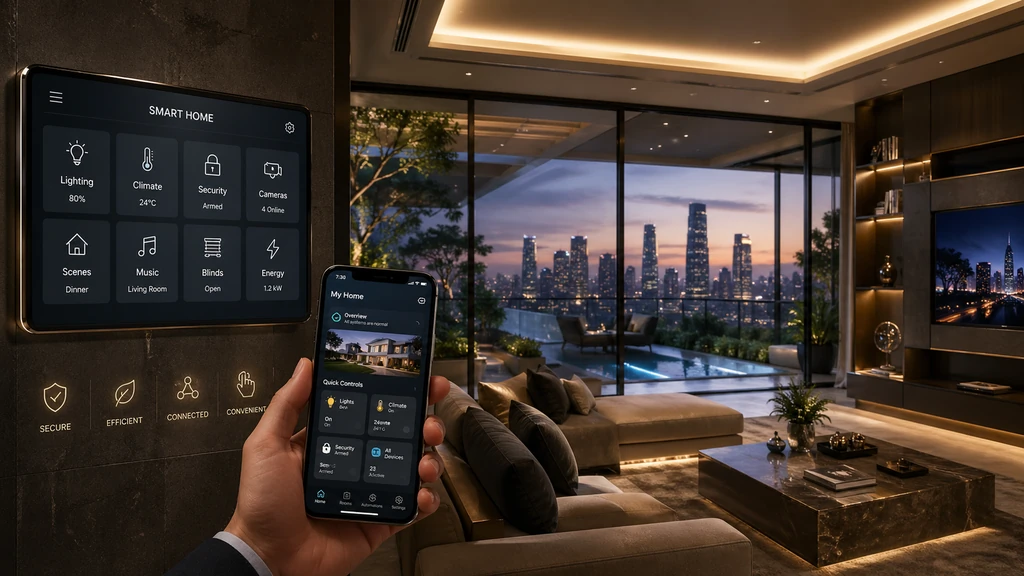
Smart home technology in luxury properties is no longer a new feature added for appeal. It has become part of the design brief from the earliest stage of planning. Luxury housing has moved beyond marble floors and private terraces. Today, comfort is shaped by how smoothly a home responds to the people living in it.
Buyers in premium segments now expect intelligent lighting, climate control, advanced security, and integrated entertainment. They are looking for homes that are efficient, secure, and easy to manage. In India’s metro cities, this shift is visible across new developments, especially in high-rise residences and gated villas.
New Definition of Luxury
Luxury once meant visible materials and large square footage. Now it also includes invisible systems that work in the background. A well-designed luxury residence uses digital controls to manage daily tasks. Lights adjust based on time of day. Curtains open automatically in the morning. Air conditioning maintains a steady temperature without constant manual changes.
This shift reflects changing lifestyles. Many homeowners travel frequently or manage businesses across time zones. They want to monitor their homes remotely. Through mobile applications and secure dashboards, residents can check cameras, switch off appliances, or adjust settings from anywhere.
This is where smart home technology in luxury properties becomes practical rather than decorative. It reduces friction in daily life.
Core Features in Luxury Smart Homes
Most high-end developments now include a combination of automation and digital control systems. The following features are common:
1. Smart Lighting Systems
Lighting can be programmed to create different moods. Homeowners can choose preset scenes for dining, reading, or hosting guests. Motion sensors in hallways reduce energy use.
2. Climate and Air Quality Control
Temperature settings can change automatically based on occupancy. Some systems also track humidity and air quality levels.
3. Integrated Security Systems
Biometric access, facial recognition entry, and real-time CCTV monitoring are widely adopted in luxury smart homes. Alerts are sent directly to the homeowner’s phone in case of unusual activity.
4. Audio-Visual Integration
Home theaters, multi-room speakers, and centralized control panels allow residents to manage entertainment from one interface.
These elements are often supported by structured wiring and centralized control hubs, which make upgrades easier in the future.
Growth of Home Automation Systems India
Over the past few years, demand for home automation systems in India has grown steadily. Developers in cities such as Mumbai, Bengaluru, Hyderabad, and Delhi NCR are partnering with technology firms during the construction phase itself. Instead of retrofitting automation later, wiring and system architecture are integrated into the building plan.
This approach ensures cleaner execution and long-term reliability. Buyers are also more aware of system compatibility. They ask whether devices can integrate with global platforms, whether software updates are secure, and how data privacy is managed.
The market for automation systems for homes in India is supported by falling hardware costs and better internet infrastructure. As fiber connectivity improves in urban areas, remote access and cloud-based controls become more stable.
IoT in Real Estate and Connected Living
The use of IoT has changed how buildings are managed. IoT devices collect and share data through connected networks. In a luxury residence, this can include smart meters, water sensors, occupancy detectors, and energy management systems.
For individual homeowners, IoT devices help track electricity usage and identify inefficiencies. For developers and housing societies, IoT platforms assist in managing common areas, elevators, parking systems, and surveillance networks.
The integration of IoT in real estate also supports predictive maintenance. For example, sensors can detect water leakage early or signal when equipment needs servicing. This reduces long-term repair costs and improves safety.
Design Integration and Aesthetic Control
One concern among buyers is whether automation will disturb the visual appeal of a luxury home. Modern systems address this by using concealed panels, slim touch screens, and wireless controls. Voice assistants and mobile apps reduce the need for multiple wall switches.
Architects now coordinate closely with technology consultants. Control rooms, server racks, and power backups are planned discreetly. The goal is to preserve the visual elegance of the property while enhancing functionality.
Also Read: Luxury Design Trends for Premium Apartments in 2026
Energy Efficiency and Sustainability
Luxury buyers are increasingly aware of energy costs and environmental impact. Automated systems help reduce wastage. Lights switch off automatically in empty rooms. Irrigation systems adjust based on weather data. Solar panels can be monitored through digital dashboards.
These measures may seem small, but in large homes they make a measurable difference. Automation also provides detailed energy reports, helping homeowners understand their consumption patterns.
While sustainability is not always the primary driver in luxury projects, it has become an added advantage. Smart controls align well with green building certifications.
Data Security and Privacy
As homes become more connected, security extends beyond physical access. Digital security is equally important. Developers and technology providers must ensure encrypted communication between devices.
Homeowners often ask about server locations, data storage policies, and software update cycles. Reputable systems offer secure networks and regular patches to prevent vulnerabilities.
A balanced approach is necessary. Overcomplicated systems can be difficult to manage. Clear user interfaces and reliable customer support remain critical.
Investment Perspective
From an investment point of view, smart technology in luxury properties adds differentiation in competitive markets. Buyers compare projects not only on location and amenities but also on digital infrastructure.
Resale value can improve when systems are well maintained and easy to upgrade. However, technology evolves quickly. Developers must avoid outdated platforms that may become incompatible in a few years.
The focus should be on scalable systems that allow future expansion. Modular design and open integration standards help protect long-term value.
The Indian Context
India’s luxury housing market has expanded in cities such as Mumbai, Pune, Bengaluru, and Gurugram. High-net-worth individuals and returning expatriates often expect global standards.
Smart home technology in luxury properties reflects aspiration and practicality. It supports busy lifestyles, enhances security, and provides convenience in busy urban environments.
The adoption of automation is also spreading to tier-two cities, though at a slower pace. As awareness grows, digital readiness will likely become standard in premium areas.
Looking Ahead
Technology will continue to evolve. Artificial intelligence may refine climate control and security systems. Voice interaction will improve. Interoperability between devices will become more seamless.
Yet the core purpose will remain the same. Luxury housing must provide comfort, privacy, and reliability. Technology should serve these goals quietly and consistently.
When implemented thoughtfully, luxury smart homes strengthen the overall living experience without overshadowing design or human needs.
Posted By

Akshay Gupta
info@houssed.com
Akshay Gupta writes about lifestyle and modern living for Houssed, focusing on practical décor ideas and everyday comfort. His work offers simple guidance to help readers create functional and welcoming home environments.