

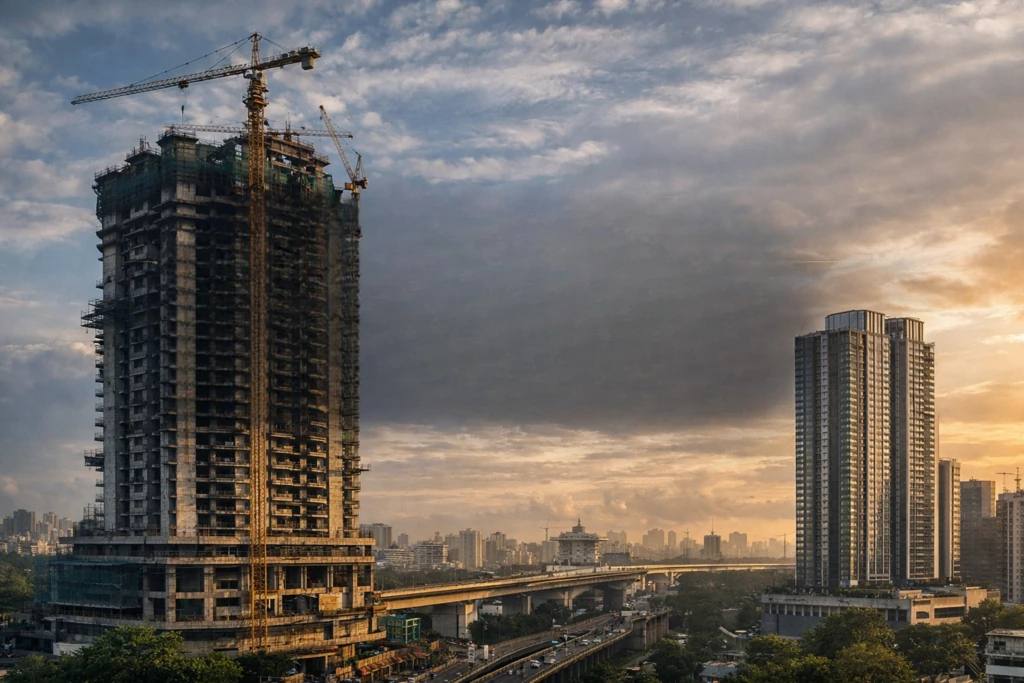
The Indian real estate sector in 2026 is shifting through a phase of steady yet cautious growth. Interest rates remain uneven, construction costs have stayed high, and buyers are far more informed than they were a decade ago. In this environment, the way large developers respond to uncertainty matters more than ever. Lodha Group's offer reflects how scale, discipline, and adaptability can help a real estate company stay resilient during volatile times.
Market shaped by caution and choice
Volatility in 2026 does not mean a slowdown everywhere. Housing demand in major cities continues, but it's more selective. Buyers are focusing on clear titles, market rates, and delivery timelines. At the same time, commercial real estate is adjusting to hybrid work models, while retail and warehousing are finding new demand drivers.
Developers today must manage rising input costs, regulatory compliance, and changing buyer expectations all at once. The challenge is not just to increase but to expand responsibly without stretching balance sheets or exaggerating customers.
Focus on core locations
One way large developers are managing risk is by staying focused on strong urban markets. Instead of spreading thin across many smaller cities, many have concentrated on metros where infrastructure spending, employment, and property demand remain consistent.
For Lodha Group, it has meant a continued importance on cities with long-term economic visibility. By emphasising locations with proven demand, the group reduces the unreliability. This approach also helps in planning projects with clearer timelines and more assumed sales cycles.
Financial discipline over aggressive expansion
In past real estate cycles, aggressive borrowing was a common reason for distress when markets turned. In 2026, financial discipline has become a key differentiator. Developers are paying watching closely about
cash flows, debt levels, and phased construction.
Rather than launching many projects at once, large players are constructing projects in layers. This allows sales from early phases to fund later ones, reducing dependence on external financing. Such caution helps developers stay flexible if market conditions shift suddenly.
2. Adapting to changing buyer needs
Today’s homebuyers are not just looking at price and location. They want better layouts, reliable amenities, and communities that support daily life. There's also growing interest in ready or near-ready homes, as buyers prefer lower execution risk.
This shift has influenced how Lodha Group projects are planned and delivered. Design choices, open spaces, and usable amenities now play a larger role than pure scale. By responding to how people actually live and work, developers can keep demand steady even when the overall market attitude is cautious.
Read: Prestige Residential Projects in Bangalore 2026 for Luxury Homebuyers
Using technology to manage uncertainty
Technology is playing a quiet but important role in handling volatility. Digital sales platforms, data-driven demand forecasting, and project management tools help developers make faster and more informed decisions.
Virtual site visits and online documentation have also reduced risk in the buying process. These tools may not eliminate market risks, but they help companies respond more quickly to changing trends, which is critical in uncertain times.
3. Sustainability as a long-term hedge
Environmental and sustainability concerns are no longer just branding topics. Efficient energy use, water management, and long-term maintenance costs are becoming real decision factors for buyers and investors.
By integrating sustainable practices early, developers can reduce operating costs over time and make their projects more resilient. This also aligns with the expectations placed on large firms that are often grouped among the top real estate developers in India, where scrutiny from regulators and customers tends to be higher.
Industry-wide maturity
It is important to note that these shifts are not unique to a single company. Across the sector, many established firms are becoming more cautious and structured in their approach. Competition remains healthy, and different developers bring different strengths to the market.
The broader trend among the top real estate developers in India suggests a move away from rapid, debt-driven growth toward steadier and more transparent business models. This maturity is helping the sector handle short-term volatility with more confidence than in previous cycles.
Looking ahead
As 2026 unfolds, uncertainty is likely to remain part of the real estate landscape. Interest rates, global economic signals, and policy changes will continue to influence buyer sentiment. The companies that manage this well will be those that stay realistic, flexible, and customer-focused.
For Lodha Group, managing this phase appears to be less about chasing rapid expansion and more about refining execution. With a measured approach to planning, finance, and delivery, and by aligning Lodha Group projects with actual market demand, the company is locating itself to stay stable rather than spectacular.
Posted By

Ruchi Mane
info@houssed.com
Ruchi Mane is the Senior Editor at Houssed, leading the platform’s real estate news coverage. She tracks trends in India’s luxury property market while overseeing editorial strategy, PR outreach, and social media communication.