

26 February 2026 | Mumbai
Affordable housing in Mumbai remains one of the city’s most urgent urban challenges, and the Maharashtra Housing and Area Development Authority has outlined a structural plan to address it. Vice-President and CEO Sanjeev Jaiswal said that limited land for new projects, high government premiums and taxes, and complex redevelopment rules have made home ownership difficult for large sections of the population.
Jaiswal said Mumbai’s affordability index is close to 50. This means that a common homebuyer would spend about half of their monthly income on loan repayments if they purchased a house. That level of financial strain makes ownership difficult for middle-income families and for those in the EWS and LIG categories, he noted.
He suggested that reducing premiums, development charges, and certain taxes for affordable housing projects could significantly lower prices. According to him, a well-planned reduction in these costs could bring down housing prices by nearly 25%.
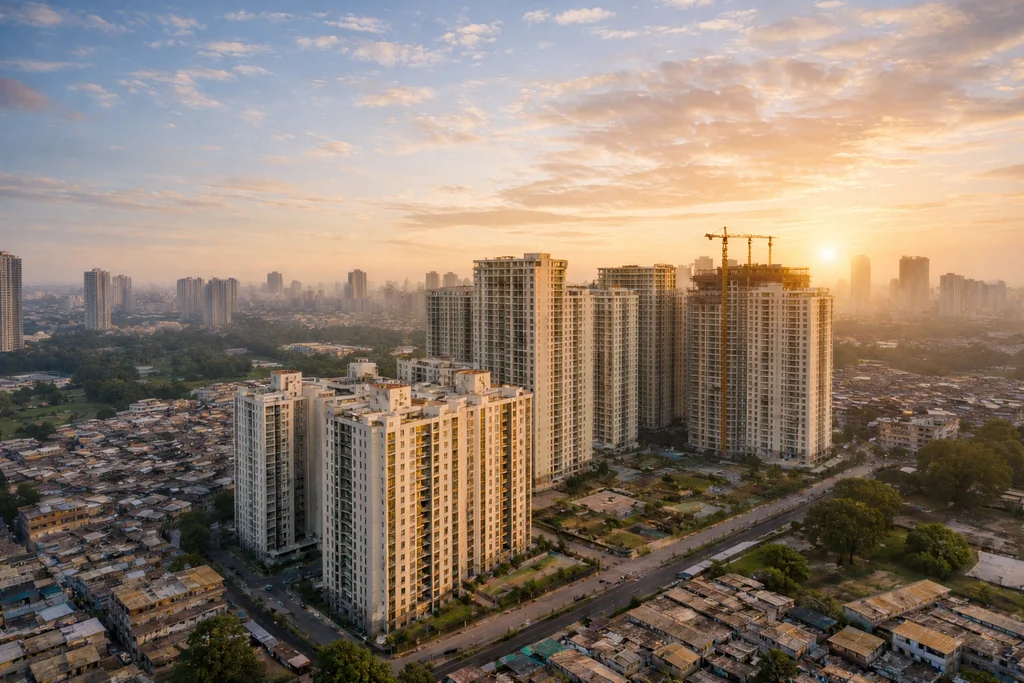
Since almost 90% of Mumbai’s developable land has already been used, MHADA is shifting its focus to cluster redevelopment. Instead of redeveloping one building at a time, the authority plans to redevelop larger areas of 60 to 100 acres in a planned manner. Jaiswal said MHADA is opening up 800 to 1,000 acres for cluster redevelopment, which he described as a first for the city.
Projects in areas like GTB Nagar and Abhyudaya Nagar are already at advanced stages, and more clusters are being prepared. The aim is to create organized layouts with better infrastructure, open spaces, and public amenities, effectively building well-planned townships within the city. Officials believe this model can significantly strengthen affordable housing in Mumbai by creating more housing stock within existing urban limits.
This redevelopment push is also aligned with Maharashtra’s broader housing goals. Under the state’s growth plan, 2.8 million affordable homes are expected to be built across the Mumbai Metropolitan Region by 2030. MHADA will directly and indirectly contribute around 0.8 million units through various schemes.
Jaiswal said that nearly 50,000 homes have been delivered in the past two and a half years. He added that 60-70% of future housing supply is likely to come from approved or upcoming group redevelopment projects. Through its redevelopment share, MHADA expects to generate a large number of homes for EWS and LIG buyers over the next five to seven years.
He also pointed to major infrastructure upgrades as important growth drivers. Metro lines, the Navi Mumbai International Airport, and new township developments could help spread housing demand more evenly across the region. However, he warned developers about the risk of building too much supply too quickly, as demand may not immediately keep pace, leading to unsold supplies.
Under the upcoming 2025 housing policy, MHADA is promoting a broader housing mix. This includes rental housing, student accommodation, working women’s hostels, and industrial housing, alongside ownership-based projects.
Jaiswal made a direct appeal to private developers. He said luxury homes will always find buyers, but the real pressure lies in serving middle-income individuals and first-time buyers. He encouraged developers to include a small, affordable component, even in premium projects. Allocating 5 to 10 percent of units for affordable housing may reduce profit margins slightly, he said, but it would contribute to social balance and long-term public trust.
As redevelopment gathers pace and policy reforms take shape, affordable housing in Mumbai will depend on coordinated planning, rational pricing, and sustained public-private participation over the coming decade.
Posted By

Ruchi Mane
info@houssed.com
Ruchi Mane is the Senior Editor at Houssed, leading the platform’s real estate news coverage. She tracks trends in India’s luxury property market while overseeing editorial strategy, PR outreach, and social media communication.