

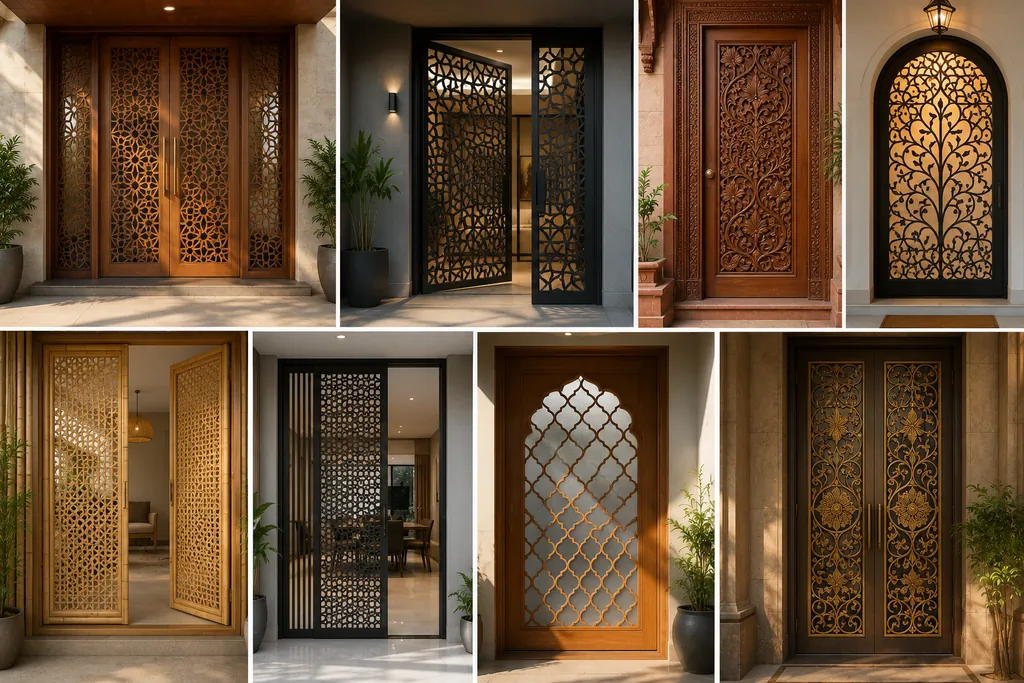
A few years ago, jali doors were mostly something you'd notice in an old haveli or a temple courtyard pretty, but not exactly what you'd put on a new build. That's changed. Architects and homeowners have brought the jali back into mainstream design, and honestly, it's not hard to see why once you've lived with one. There's something about light filtering through a carved or cut pattern that a flat wooden door just can't give you.
If you're weighing a Modern Jali Door Design for your own entrance, this guide covers why people are choosing them, which styles are actually worth your money in 2026, and how to land on the right one without second-guessing yourself for weeks.
Why People Keep Coming Back to Jali Doors
Looks aside and the looks are a big part of it there are some genuinely practical reasons this style has stuck around for centuries and is now having a second life in modern homes.
For one, air actually moves through the door even when it's closed. In a lot of Indian climates that's not a small thing; it can be the difference between a stuffy entryway and one that feels breathable. Then there's the light. Instead of a hard wall of wood right at your entrance, you get this softer, broken-up glow that shifts through the day, which sounds like a small detail until you've actually stood in a hallway lit that way.
Privacy is the part people worry about most, and fair enough but most jali patterns are dense enough that nobody's peering straight into your living room. You get the screening effect without the house feeling shut off from the world. And depending on what material you go with, these doors can be just as tough as a solid one, sometimes tougher, since well-treated wood or coated metal shrugs off weather and pests better than people expect.
What I'd argue is the real selling point, though, is flexibility. A jali pattern can go anywhere from heavily ornamental to almost severely minimal, so it's not a style that locks you into one look. You're not choosing "traditional" or "modern" you're choosing how traditional or modern, which is a more useful way to think about it.
Jali Styles That Are Actually Worth Considering
There's no shortage of options here, so let's go through the ones that tend to hold up well in practice, not just in a brochure photo.
Laser-cut metal panels have probably had the biggest impact on what a Modern Jali Door Design even looks like today. CNC and fiber-laser cutting let you get patterns paisleys, florals, tight geometric grids with a precision hand-carving just can't match. Stainless steel or powder-coated mild steel holds up outdoors, too, so this isn't just an indoor option.
If sustainability matters to you, treated bamboo woven into lattice panels is worth a look. It's light, naturally resists termites, and fits nicely into homes that are already leaning eco-conscious in their other design choices.For something more pared-back, minimalist steel screens clean horizontal lines, simple grids suit urban or industrial-style homes well. Pair one with glass backing and you get a sleek look without giving up security.Stained or frosted glass set into a wood or metal jali frame makes for a genuinely striking entrance. Mughal and Gothic-inspired motifs show up a lot here, and they tend to become the one thing visitors comment on.
Then there's hand-carved wood teak or Sheesham, usually which I still think is the most beautiful option if your home leans heritage. The slight irregularity from hand-carving gives it a warmth that machine-cut materials don't really replicate, even the good ones.Half-jali doors are a smart practical compromise: solid panel at the bottom for full privacy near eye level, jali pattern up top for light and air. Works well in apartments where you don't have full control over the entrance design anyway.
Cast iron or brass doors with floral spirals and traditional motifs are for homes that want a grander, more old-world entrance statement not subtle, but that's sort of the point.And lately, some homeowners are commissioning jali panels based on regional art styles like Warli or Madhubani. It turns the door into something closer to a piece of art than just an entry point, which is a nice way to bring local craft into a modern build.
What Material Should You Actually Pick?
This is where budget and maintenance tolerance start to matter more than aesthetics.
Wood teak, oak, mango is still the classic choice and carves into the most detailed patterns, but it does need periodic sealing or refinishing depending on your climate. MDF is the budget-friendly route, smooth and easy to paint, and it works fine for interior jali panels where you're not dealing with rain or direct sun. Metal wrought iron, brass, stainless steel gives you strength and a more contemporary feel, and it's generally easier to live with long-term since it doesn't need the same upkeep as timber. Glass jali inserts, whether perforated or frosted, add a modern touch and usually get paired with another material for structural support. Stone is the rarest choice, mostly because of cost and weight, but if you want something that will genuinely outlast everything else in the house, it's hard to beat.
How to Actually Decide
A handful of honest questions will get you to the right answer faster than scrolling through more inspiration photos.
Does the style actually match your home, or are you just drawn to a picture you saw online? A heavily carved wooden door looks out of place on a stark, minimal facade, and a stripped-back steel screen can feel oddly cold on a heritage-style house. It's also worth checking the best vastu direction for your home before you commit, since the main door direction as per vastu for your home sometimes comes with recommendations around how open or dense the door pattern should be.
How much privacy do you genuinely need at that spot? A main entrance on a busy street wants something denser than an interior door between two living spaces.
What's your climate actually like? If you're somewhere humid or coastal, metal or properly treated wood is going to serve you better than untreated timber, which can warp or invite pests over time.
Be honest about maintenance, too. Hand-carved wood is gorgeous, but it asks more of you than a powder-coated steel door ever will.
And budget, obviously. MDF and basic steel keep things affordable; hand-carved wood, brass, and stained glass sit at the top end if you've got the room to spend.
Where That Leaves You
A Modern Jali Door Design isn't really about chasing a trend it's one of those upgrades that actually changes how a space feels day to day, not just how it photographs. Whether you end up going with a laser-cut steel panel for a contemporary build or a hand-carved teak door for something with more heritage character, the right choice really comes down to matching the pattern and material to how you actually use that space, not just what looks good in a single photo.
Posted By

Saria George
info@houssed.com
Saria George is a home décor writer at Houssed who focuses on interior design, décor trends, furniture, and practical ideas for modern living spaces. Her work highlights simple design choices that balance comfort, functionality, and aesthetics.