

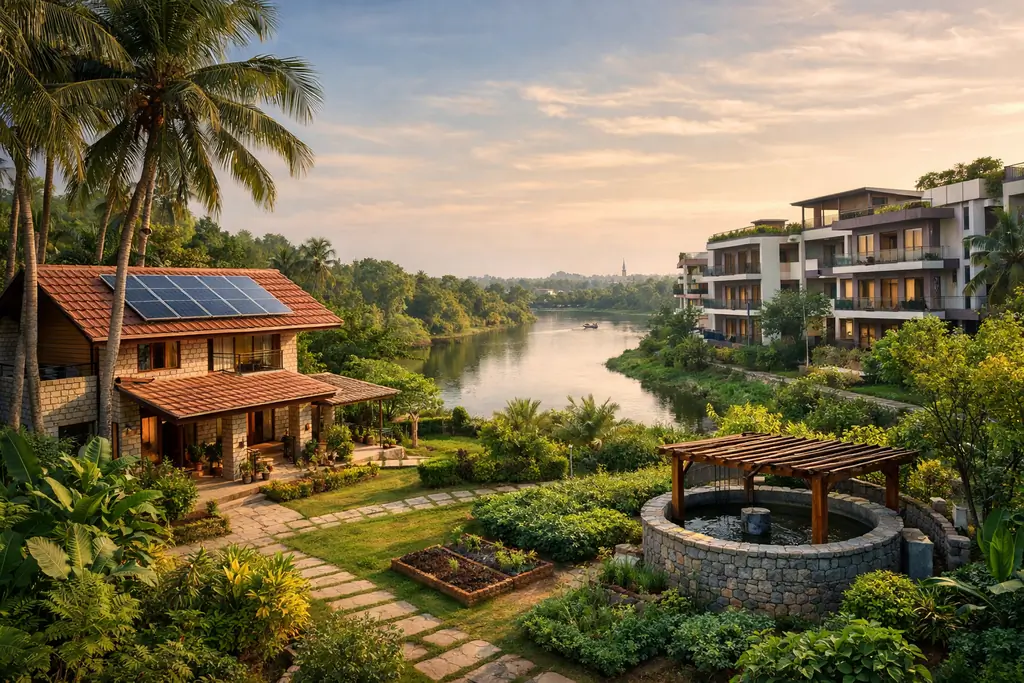
Sustainable homes in Aluva are gaining attention as the town has always been known for its calm riverside feel, easy travel links, and strong sense of community. Today, homebuyers in Aluva are also thinking deeply about how their homes support everyday comfort, long-term savings, and the environment around them.
Rising power bills, water concerns, and changing weather patterns have made people pause and reflect on how their homes are built and used. This growing awareness is shaping how homes are being built in Aluva today. Families are choosing spaces that respect nature, reduce waste, and support healthier routines without changing their lifestyle completely. From thoughtful layouts to better use of light, air, and water, eco-friendly housing is becoming a natural choice for people who want comfort along with long-term peace of mind.
1. Why Eco-friendly Living Makes Sense In Aluva
Aluva’s climate is warm and humid for most of the year, with heavy monsoons in between. Traditional concrete homes often trap heat, need more cooling, and lead to higher electricity bills. Eco-friendly homes are planned differently.
They focus on:
- Better airflow
- More natural light
- Reduced water and power use
This not only lowers monthly costs but also creates a more comfortable living space. For families, especially those with children or elderly members, cleaner air and quieter surroundings make a real difference.
Read: Edapally Real Estate: Buyer Trends, Demand & Market Growth
2. What makes a home eco-friendly?
Eco-friendly home ideas come from old Kerala-style homes, upgraded for modern living.
Common features of eco-friendly homes
Natural and local materials
Builders often use locally sourced materials, which last longer in Kerala’s climate and reduce transport pollution.
Waste management
Many communities now have composting pits or simple waste separation systems, making daily life cleaner and easier.
Smart use of sunlight and wind
Electricity use is a major concern for many households. Power costs can rise quickly when cooling systems, water heaters, and lighting run all day. This is where energy-efficient homes make a clear difference.
LED lighting, efficient fans, and well-placed windows reduce the need for artificial light and cooling. Some homes now feature solar panels for common areas or water heating. Even when used on a small scale, these systems can cut power use over the year.
In Aluva, where sunlight is available throughout the year, features like this are practical and easy to maintain.
Water care and everyday living
Water management is another key part of eco-friendly housing. Rainwater harvesting systems are becoming more common in new projects. Collected rainwater can be used for gardening, cleaning, and other non-drinking needs.
Low-flow taps and dual-flush washrooms help reduce daily water use without affecting comfort. In apartment settings, shared water treatment systems allow reuse of water for landscaping and cleaning common spaces.
These steps support long-term water security, which is especially important during dry months when supply can become uneven.
3. Sustainable living options available in 2026
Aluva now offers several eco-friendly housing choices, depending on your lifestyle and budget.
Independent eco-homes
These are perfect for families who want privacy and control. Owners can add solar panels, kitchen gardens, and natural cooling features over time.
Low-rise apartment communities
These projects focus on shared green spaces, good ventilation, and efficient use of land. They are ideal for people who want modern comforts without harming the environment.
Gated eco-communities
Some developers now offer planned neighborhoods with walking paths, native plants, and shared water systems. These spaces encourage community living while staying close to nature.
The demand for sustainable homes in Aluva has encouraged builders to think long-term, not just about selling homes, but about creating livable neighborhoods.
4. Apartment living with a green focus
Not everyone in Aluva is looking for a standalone house. Apartments are a popular choice for young professionals, small families, and retirees. Today, Green Flats Aluva is gaining attention for offering eco-friendly features within a shared living setup.
Such flats often include good waste sorting systems, natural ventilation in corridors, and shared green spaces. Some projects also support rooftop gardens or small planting areas that residents can care for together.
Living in an eco-focused apartment does not mean compromising on comfort. Lifts, security, parking, and community areas are still part of the plan, just designed with more care for energy and space use.
Cost vs long-term value
Eco-friendly homes may seem slightly more expensive at first, but the long-term savings are hard to ignore.
Lower electricity bills, reduced water costs, and minimal repair needs mean homeowners save money year after year. Add to that the rising value of eco-conscious properties, and the investment starts to make sense.
Homes that focus on efficiency also age better. They handle climate changes more comfortably and need fewer upgrades later.
Also Read: Explore Luxury Apartments in Kochi—Premium Living Spaces
5. A healthier way of life
Beyond savings, eco-friendly homes support better health. Natural light improves mood, good ventilation reduces indoor pollution, and green surroundings lower stress.
Children grow up with more outdoor space. Adults enjoy quieter mornings and cooler evenings.
Aluva’s role in Kerala’s green future
Across the state, builders and buyers are becoming more aware of their environmental impact. Eco-friendly properties in Kerala are no longer just a trend; they’re becoming a standard people expect.
Aluva stands out because it still has space to grow responsibly. With better planning and conscious choices, the town can expand without losing its natural beauty.
Projects that focus on energy-efficient homes are leading the way, showing that comfort and sustainability can go together.
6. What to look for when choosing an eco-friendly home
Buyers do not need expert knowledge to spot a good eco-friendly home. Simple questions can help:
- Does the home get enough natural light and air?
- Are water-saving features included?
- Is the layout designed to stay cool?
- How is waste managed in the building?
Clear answers to these points often show how seriously a project takes sustainability.
Also Read: Which Kakkanad Properties Give the Best Value for Money?
Is eco-friendly living right for you?
If you emphasize low maintenance costs, cleaner surroundings, and a future-ready home, the answer is likely yes. Eco-friendly homes are not about giving things up. They’re about living smarter.
Whether you’re buying your first home or upgrading, choosing sustainable homes in Aluva means investing in comfort, health, and long-term value.
Posted By

Siddharth Jangam
info@houssed.com
Siddharth Jangam contributes to the Guides section at Houssed and works as a Digital Media Specialist focused on SEO and social media marketing. He shares insights that help readers understand India’s real estate market and buyer behavior.