

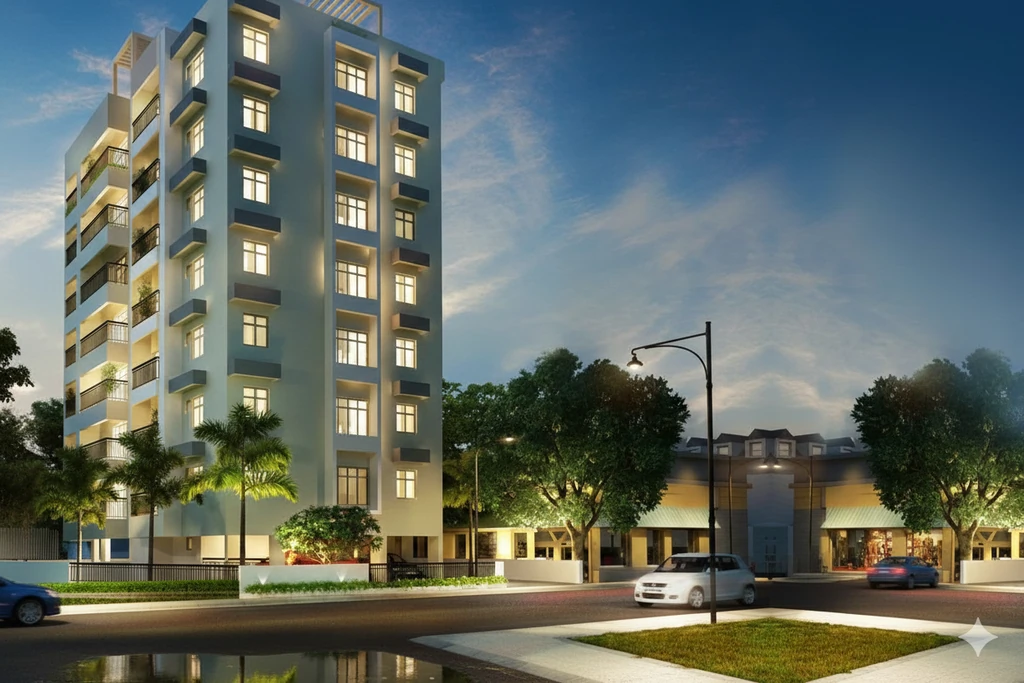
Kakkanad has quietly turned out to be one of the most watched residential markets in Kochi. What used to be considered a functional IT suburb is presently a complicated property ecosystem where, within just a few kilometers, price, demand, and buyer expectation differ sharply. It has created for buyers an opportunity mixed with confusion because the apartments across the location lie over such a wide price spectrum, often with no obvious differences on the surface. The central question here is not whether to buy but which of these properties actually delivers value for money.
However, value is not a simple calculation of price per square foot. In Kakkanad, it’s about what you truly get over time. Does it fit your lifestyle? What will you spend on upkeep? Will it be easy to rent out, or will selling it later be a hassle? That’s what really matters. So, let’s break down what buyers really gain or lose over time and see what’s actually worth it for the future.
1. Redefining “Value for Money” in Kakkanad
Most buyers mistakenly associate the term "value for money" with affordability. But Kakkanad proves why it’s inaccurate. A low entry price can rapidly lose its value if there are high maintenance costs, insufficient layouts, and low demand rentals.
A more accurate framework value will be based on six interrelated pillars:
- Cost of acquisition, maintenance, and operations
- Usable carpet area and layout efficiency
- Location and accessibility
- Potential income through rentals
- Liquidity of resale and demand consistency
A property that performs well across all six interrelated pillars usually outperforms a “cheap” or “premium” option that excels in only one.
2. Micro-Locations: Why Kakkanad Is Not One Market
The biggest mistake of buyers is considering Kakkanad as a single residential zone, but actually, it operates as multiple micro-markets, each with distinct pricing and advantages.
Infopark SmartCity Belt
Properties nearby Infopark and SmartCity consistently have the strongest rental results. The need for housing driven by jobs stays steady, so demand here doesn't change as much with the market. Prices are a bit higher in this zone, but you're less likely to have empty units, and resale timings are shorter. For investors, this area often delivers better risk-adjusted returns.
Seaport Airport Road Corridor
This corridor has gained popularity due to better road infrastructure and reduced transit time to key areas. Properties here attract buyers prioritizing travel efficiency and long-term connectivity rather than instant rental yield. Value here lies in time savings and lifestyle convenience, which indirectly supports price stability.
Interior Residential Pockets
Areas such as Edachira, Thengode, and parts of Padamugal offer relatively lower price points and larger layouts. These properties often deliver exceptional carpet efficiency and peaceful living environments. While rental demand may be slightly softer, end-users benefit from lower investment costs and reduced maintenance burdens.
Understanding these micro-differences is important. Two properties priced similarly can deliver entirely different value outcomes depending on their exact location.
3. Layout Efficiency: The Most Underrated Value Driver
In Kakkanad, layout quality frequently matters more than apartment size. Buyers often overlook carpet efficiency, yet this single factor can unexpectedly alter perceived and real value.
Properties that offer higher carpet-to-built-up ratios provide more livable space without increasing cost. Efficient layouts minimize long corridors, oversized entrances, and unusable balconies. Over a decade, it translates into better comfort, easier furnishing, and stronger resale appeal.
Interestingly, many middle-aged properties outperform newer constructions in this regard. New towers may look modern but often inflate built-up areas through shared spaces, reducing usable area. For buyers focused on value, a well-designed older apartment can be a smarter purchase than a brand-new one with compromised layouts.
4. Amenities: When More Becomes Less

Amenities are often promoted as value additions, but in Kakkanad they can quietly weaken long-term affordability. Premium amenities such as large clubhouses, rooftop pools, or multiple recreational zones increase maintenance costs regardless of how frequently residents use them.
A cost–benefit analysis reveals that practical amenities deliver better value than extensive luxury features. Gyms, basic play areas, security systems, and community halls are widely used and justify their cost. Rarely used amenities inflate monthly expenses without improving daily living or resale potential.
For value-conscious buyers, the key question is not “What amenities does this property offer?” but “Which amenities will I realistically use and pay for over the next ten years?”
5. Maintenance Costs: The Silent Budget Drain
Maintenance charges are one of the most overlooked factors during property selection, but these charges vary widely depending on building age, amenity load, and society management.
Properties that appear affordable at purchase can become expensive to live in if maintenance escalates rapidly. Over a 10-year period, even a modest difference in monthly charges can amount to several lakhs. Value-for-money properties are typically those with:
- Transparent maintenance structures
- Predictable escalation patterns
- Balanced common-area sizes
- High occupancy levels to distribute costs evenly
Buyers who factor maintenance into their cost analysis early often make more sustainable long-term choices.
6. Rental Yield: Measuring Functional Value
Rental performance offers one of the clearest indicators of value. Kakkanad’s tenant base, dominated by IT professionals, healthcare workers, and students, creates consistent demand, but not all properties benefit equally.
Properties close to workplaces, metro stations, and daily conveniences tend to achieve higher occupancy and shorter vacancy periods. Smaller, well-designed units often outperform larger ones in rental yield due to affordability and ease of leasing.
For many buyers, rental income offsets a significant portion of ownership costs. Properties where rent can cover a significant part of the EMI effectively reduce the buyer’s financial exposure, enhancing overall value.
7. Resale marketability: The Exit Test
True value is tested not at purchase, but at exit. Properties with strong resale liquidity share common characteristics: good location, high occupancy, efficient layouts, and reasonable maintenance costs.
Buildings with persistent vacancies, poor society management, or excessive maintenance burdens often struggle during resale, regardless of their original purchase price. Buyers focused on value should always evaluate how easily a property can be sold under normal market conditions.
Liquidity is not about speculative appreciation; it’s about retaining demand even when markets slow.
8. Budget Bands and Value Outcomes
Value manifests differently across price brackets. In the mid-range segment, value often comes from rental strength and efficient layouts. In higher budgets, it comes from durability, connectivity, and long-term desirability rather than luxury branding.
Across all bands, the most value-driven properties avoid extremes. They are neither the cheapest nor the most extravagant. Instead, they balance cost, functionality, and future-proofing.
A Buyer’s Value Framework for Kakkanad
- Buyers seeking value can apply a simple analytical filter:
- Does the property maximize usable space?
- Are maintenance costs aligned with actual usage?
- Is rental demand sustainable, not speculative?
- Does the micro-location support daily convenience and long-term demand?
- Will this property remain desirable five to ten years from now?
If the answer to most of these is yes, the property likely delivers genuine value.
Kakkanad’s real estate market rewards buyers who look beyond surface-level pricing and marketing narratives. The best value-for-money properties are not defined by launch offers or luxury tags, but by efficiency, livability, predictable costs, and demand resilience.
As supply and buyer awareness increase, properties that optimize these fundamentals will continue to outperform. For buyers willing to analyze rather than rush, it still offers strong opportunities, provided value is measured correctly.
Posted By

Keerthi Choxsi
info@houssed.com
Keerthi Choxsi writes about property law and real estate regulations for Houssed. She explains legal frameworks, documentation requirements, and ownership rights to help buyers and investors understand property laws in India.