

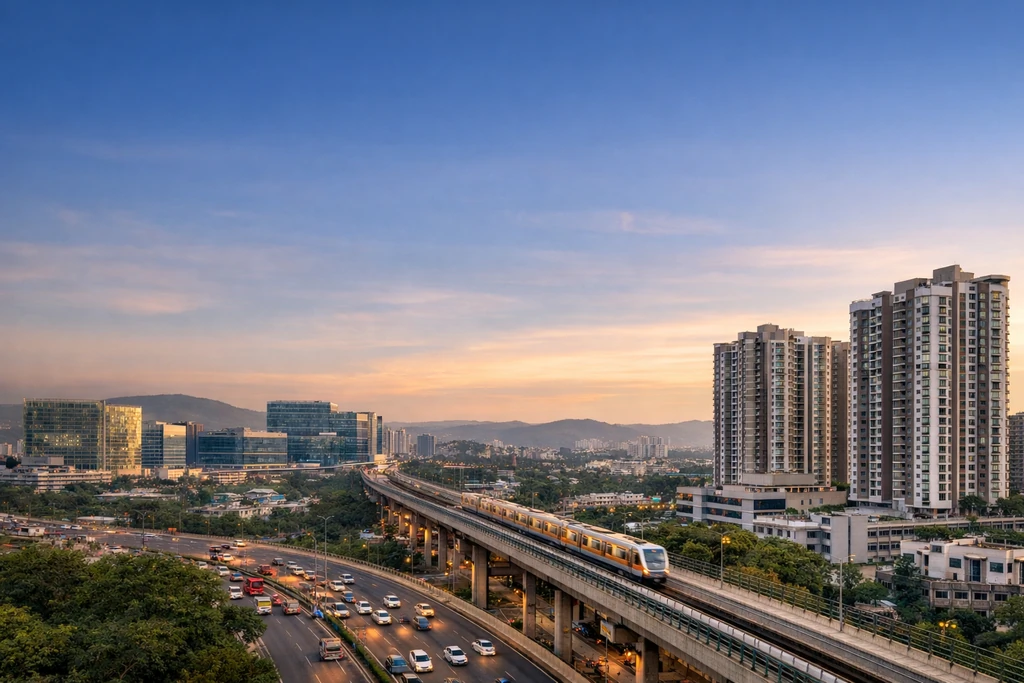
Pune’s real estate market in 2026 isn’t slowing down. What’s emerging instead is a more complex environment where only a few corridors are generating real growth. Pune continues to show measured and sustainable growth, supported by its IT sector, manufacturing base, and affordable property prices compared to cities like Mumbai and Bangalore.
Recent trends indicate that demand is no longer evenly distributed across the city. Instead, it is concentrating on well-connected corridors that offer proximity to workplaces, improved social infrastructure, and future growth potential. At the same time, many remote areas are gaining popularity due to infrastructure upgrades and lower entry prices, making them attractive for long-term investors.
Pune Real Estate Market Trends 2026
The Pune real estate outlook 2026 is shaped by three major forces: IT expansion, infrastructure upgrades, and evolving buyer preferences.
First, the IT sector continues to support demand. Areas linked to tech parks are experiencing consistent growth, especially from mid-income professionals. But unlike previous years, buyers are no longer just looking for proximity to offices; they’re prioritizing lifestyle, connectivity, and future appreciation.
Second, infrastructure is no longer a “future promise.” Projects like metro expansions, ring roads, and highway upgrades are actively reshaping property values. Locations that were once considered peripheral are now entering the mainstream.
Third, there’s a visible shift toward larger homes and integrated townships. Post-pandemic preferences haven’t disappeared; buyers want space, amenities, and long-term value.
Pune Property Growth Corridors to Watch
1. Hinjewadi Wakad Baner Belt
This remains Pune’s strongest real estate corridor, driven by its proximity to Rajiv Gandhi Infotech Park. But prices are no longer “low.”
What still works:
- Strong rental demand
- Continuous job creation
- Metro connectivity is improving accessibility
What doesn’t:
- Congestion
- Limited upside compared to earlier years
2. Kharadi-Wagholi Corridor
Kharadi has evolved into a major IT and commercial hub, and Wagholi is benefiting from spillover demand. Compared to Hinjewadi, this corridor still offers better price appreciation potential.
Why it stands out:
- Strong commercial development
- Connectivity via Nagar Road and the upcoming infrastructure
- Increasing interest from developers
But don’t ignore the risks:
- Infrastructure gaps still exist
- Over-supply in certain segments
This corridor fits perfectly under Pune property investment hotspots.
3. Talegaon-Chakan North Pune Belt
This is a longer-term investment, and most investors ignore it.
Driven by manufacturing and industrial growth, this belt is seeing a gradual increase in residential demand. It’s not flashy, but it’s quietly building a strong economic base.
What makes it attractive:
- Lower entry prices
- Industrial job growth
- Future infrastructure expansion
4. Hadapsar–Undri–NIBM Road
It attracts:
- Upper-mid income buyers
- Families looking for better living standards
- Buyers moving away from congested city zones
The upside:
- Better planning and livability
- Proximity to commercial hubs
The downside:
- Slower capital appreciation compared to IT-driven zones
This is a liveability-first, investment-second market.
Best Areas to Invest in Pune 2026
- For rental yield: Hinjewadi, Wakad
- For appreciation potential: Kharadi, Wagholi
- For long-term growth: Chakan, Talegaon
- For lifestyle living: Undri, NIBM Road
Most investors make the mistake of chasing hype instead of aligning with their goals. Also Read: Top Areas to Buy Flats in Pune for Working Professionals
Pune Property Investment Hotspots
- Follow jobs, not just infrastructure
Infrastructure drives sentiment, but jobs drive demand. Always prioritize employment hubs. - Avoid oversupplied micro-markets
Too many new launches can kill price growth. Don’t fall for glossy brochures. - Look at absorption rates, not just prices
A rising price with low demand is a red flag. - Don’t ignore resale inventory
Sometimes the best deals are in the secondary market, not new launches.
Challenges in Pune’s Real Estate Market
Let’s not pretend everything is perfect.
- Traffic and infrastructure delays still impact livability
- Over-supply in certain corridors can cap appreciation
- Interest rate sensitivity continues to affect buyer sentiment
What 2026 Really Looks Like
The Pune real estate outlook 2026 is selectively strong.
- Employment hubs
- Functional infrastructure
- Sustainable demand
If you want to get this right, stop thinking in terms of “city-level growth.” Pune is no longer one market; it’s a collection of micro-markets behaving very differently.
Posted By

Siddharth Jangam
info@houssed.com
Siddharth Jangam contributes to the Guides section at Houssed and works as a Digital Media Specialist focused on SEO and social media marketing. He shares insights that help readers understand India’s real estate market and buyer behavior.