

Mumbai | January 3, 2026
Mumbai’s real estate market observed its strongest performance in 14 years in the year 2025, with property registrations crossing the 1.5 lakh mark, strengthening the city’s position as India’s most active housing market. Data from the Inspector General of Registration and Controller of Stamps, Maharashtra, along with industry estimates, shows that 150,254 properties were registered across the municipal region during the year, a 6 percent increase over 2024.
Stamp duty collections grew at an even faster pace, rising 11 percent year on year to ₹13,487 crore. The sharper growth in revenue points to improved transaction values and sustained end-user demand, particularly in the residential segment, even as prices continued to firm across key micro-markets.
The momentum remained strong in the final month of the year. In December 2025, Mumbai recorded 14,447 property registrations, generating approximately ₹1,263 crore in stamp duty revenue. This marked a 16 percent increase compared with December 2024 and an 18 percent rise over November 2025, indicating steady buyer confidence through year-end.
Residential properties dominated market activity, accounting for nearly 80 percent of total registrations in 2025. Buyer preference continued to tilt towards compact homes, with properties under 1,000 sq ft contributing around 82 percent of December registrations. At the same time, mid-range homes priced between ₹1 crore and ₹2 crore gained share, suggesting broader participation across affordability segments rather than a narrow, price-led rally.
Alongside the mass residential market, India’s ultra-luxury housing sector recorded one of its strongest years on record. As per the data collected by Zapkey, wealthy individuals and entities spent more than ₹7,100 crore on 51 ultra-luxury homes in 2025. The year witnessed the highest-ever number of super-luxury transactions, with nine deals crossing the ₹200 crore mark and a record 30 transactions exceeding ₹100 crore, signalling a reset in price benchmarks at the very top end.
Mumbai led this segment with 35 high-value transactions worth around ₹5,100 crore, reaffirming its status as the country’s premier luxury real estate hub. Delhi NCR followed with 12 such deals, largely concentrated in the Lutyens’ zone, where buyers continued to favor independent bungalows over vertical living.
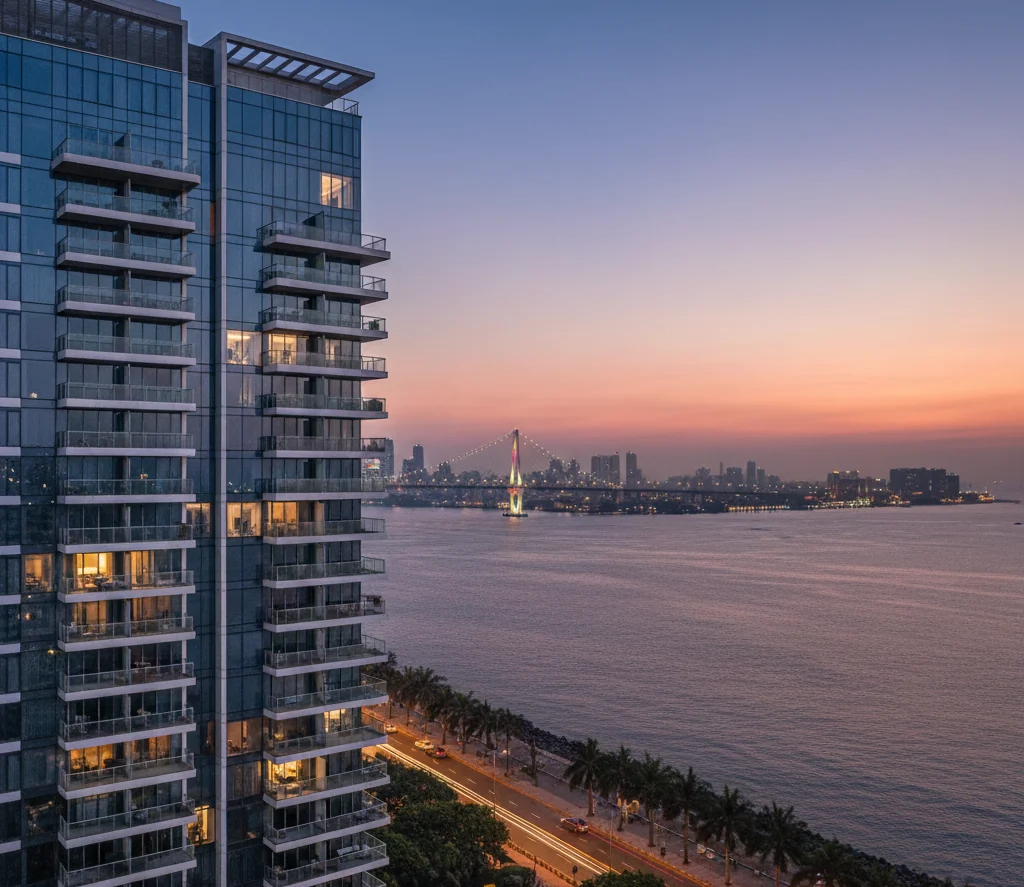
In Mumbai, Worli emerged as the standout luxury micro-market. The area accounted for 21 of the top ultra-luxury deals, cementing its reputation as the preferred location for billionaire homebuyers. The most renowned transaction of the year was pharmaceutical firm USV chairperson Leena Gandhi Tewari’s purchase of two sea-facing duplex apartments in Worli Sea Face Naman Xana for nearly ₹739 crore. The apartments, stretching across the 32nd to 35th floors with a combined area of 22,572 sq ft, were priced at over ₹2.83 lakh per sq ft on carpet area, making it the most expensive residential deal recorded in India.
Market experts note that the transaction, a personal property rather than an investment, reflects growing demand from high-net-worth individuals for ready-to-move-in, sea-facing residences, which remain extremely limited in supply. The deal also reflects rising participation from the pharmaceutical sector, led by post-Covid wealth creation and a renewed preference for real estate as a stable and aspirational asset class. Industry participants expect this momentum to carry into 2026, especially if IPO-led wealth continues to flow into property markets.
Posted By

Ruchi Mane
info@houssed.com
Ruchi Mane is the Senior Editor at Houssed, leading the platform’s real estate news coverage. She tracks trends in India’s luxury property market while overseeing editorial strategy, PR outreach, and social media communication.