

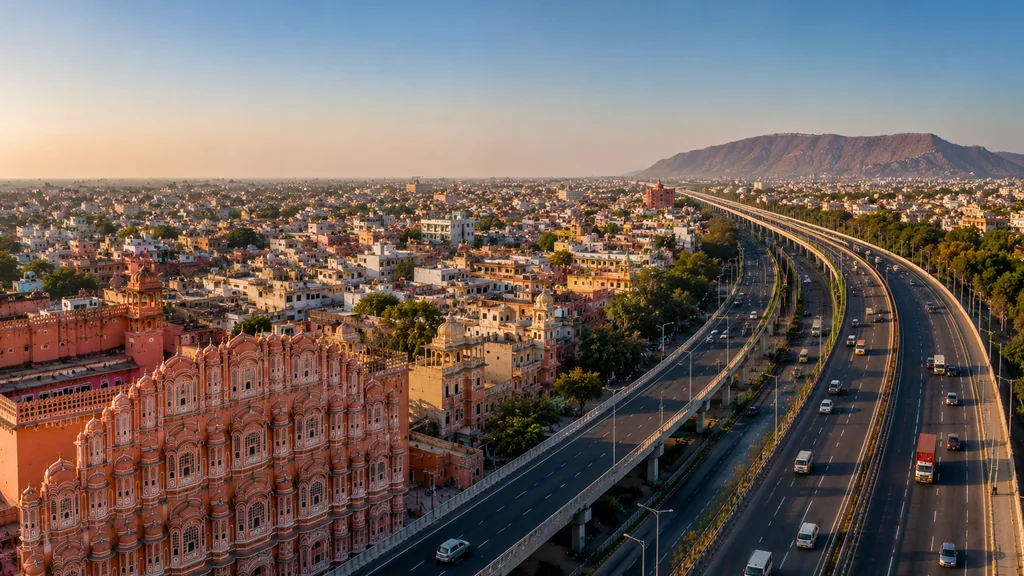
The Delhi-Mumbai Expressway is fast becoming one of the biggest growth drivers for India’s real estate sector, especially in Tier-II cities like Jaipur and Indore. As connectivity improves across northern and western India, developers, investors, and businesses are increasingly shifting their attention beyond traditional metro cities.
Experts say the massive infrastructure project is already pushing up property prices, increasing office demand, and creating new industrial and logistics opportunities along the corridor.
The 1,350-km Delhi-Mumbai Expressway connects Delhi to Mumbai through Haryana, Rajasthan, Madhya Pradesh, Gujarat, and Maharashtra. Cities such as Jaipur, Kota, Udaipur, Indore, Ahmedabad, Vadodara, and Surat are expected to benefit from better road connectivity, reduced travel time, and faster movement of goods.
According to industry experts, this improved infrastructure is changing how people and businesses look at emerging cities.
Property Prices Rise in Key Markets
Real estate consultants say residential and plotted development prices in Jaipur have increased by nearly 12–18 percent over the last year. Areas connected to major infrastructure upgrades and business hubs are seeing especially strong demand. Also Read: Homes for Rent in Jaipur: Flats, Villas and Independent Houses
Meanwhile, property prices in Indore have appreciated by around 10–15 percent, supported by industrial growth and better connectivity.
A report noted that land prices across several micro-markets linked to the expressway have witnessed significant appreciation as investors prepare for long-term urban expansion.
Jaipur Emerges as a Major Real Estate Hotspot
Among all the cities connected through the expressway network, Jaipur is emerging as one of the strongest performers.
The city is attracting multinational companies, IT firms, and Global Capability Centres (GCCs) due to lower operational costs compared to NCR markets. Office rentals in Jaipur remain nearly 54 percent lower than key Tier-I cities.
This affordability is encouraging companies to expand into the city while maintaining lower costs.
Flexible workspace operators like IWG, Smartworks, and Awfis have already increased their presence in Jaipur over the past year.
Data from CRE Matrix shows Jaipur’s office stock stood at 7.8 million square feet in 2025 and could grow to nearly 13 million square feet by 2030. Also Read: Upcoming Infrastructure Projects Impacting Jaipur Property Prices
Logistics and Industrial Demand Gains Momentum
The expressway is also expected to boost industrial and warehousing activity across connected regions.
One major beneficiary is Mahindra Lifespace Developers’s 3,000-acre Mahindra World City in Jaipur, which is witnessing increasing demand from logistics and manufacturing companies.
Developers say better road connectivity is encouraging companies to move warehousing and industrial operations toward lower-cost cities connected to the expressway.
Indore Attracts Growing Investor Attention
Indore is also emerging as a strong real estate growth market. Developers say the city is witnessing rising demand across residential, retail, and commercial segments due to infrastructure upgrades and growing business activity.
City-based real estate firm Micro Mitti estimates rentals for IT and enterprise occupiers at its upcoming Cybercity project could range between Rs 150 and Rs 200 per square foot.
Analysts believe the Delhi-Mumbai Expressway could significantly reshape India’s real estate landscape by shifting growth beyond traditional metro cities and creating entirely new economic corridors across northern and western India.
Posted By

Ruchi Mane
info@houssed.com
Ruchi Mane is the Senior Editor at Houssed, leading the platform’s real estate news coverage. She tracks trends in India’s luxury property market while overseeing editorial strategy, PR outreach, and social media communication.