

Staircases might not look that important at first, but they can actually shift energy flows around your home. In Vastu Shastra, staircases play a major part and it matters more than people think. They can support good vibes moving properly through your space, in a smoother, more balanced way. Here’s a guide that will unpack how Vastu views stairs and what kind of effect they can have on the overall ambience in your home.
What is the Vastu Shastra for Staircase?
When we talk about staircases, it not only means building steps, it’s also kind of about how you arrange everything around them. As per Vastu Shastra, how you make the staircase and where you keep it really matters. It is not only “go up ,go down”, rather it’s about how the good energy kind of flows in your house and how those vibes travel from room to room.
Vastu rules for staircases are surprisingly engaging. They say the Vastu direction of the staircase and its placement can change the whole atmosphere. Ideally, the staircase should follow a specific turn or orientation so the positive vibes move smoothly, without getting stuck or feeling blocked. And yes, the exact spot where the staircase sits, along with what material it is made from, also plays a big role. When you follow these suggestions, your staircase doesn’t just look neat, it also supports a calmer, brighter feeling at home for everyone living there, even if you don’t notice it right away.
Importance of Vastu Shastra for Staircase
The arrangement of a staircase in a home holds significance due to its impact on energy flow and inhabitants' well-being. Here are five essential aspects:
- Direction: Staircases are recommended in the west, south, or southwest areas, as per Vastu, to facilitate upward movement and stability.
- Design & Shape: A staircase should spiral clockwise and have a regular shape to ensure smooth energy flow and stability.
- Materials & Colours: Wooden or marble stairs are favoured, and light shades or natural colours promote positivity.
- Space Beneath: Keeping the space under the staircase open helps maintain positive energy flow.
- Safety & Well-being: A well-lit, clutter-free staircase ensures safety and supports overall well-being as per Vastu principles
A Guide to Staircase as per Vastu Shastra
In Vastu Shastra, pretty much every aspect of a home’s construction is said to affect how energy moves through the space, like it has a kind of timing or direction. A key part in this whole idea is the staircase, which people view as more than just a way to move between floors. It is also treated like a passage where good energies, or sometimes unpleasant vibrations, can travel. If the staircase is planned in an appropriate way, it is believed it can support the overall comfort, health, and also the prosperity of the people living there. Below is a detailed guide for adding Vastu-friendly details into the design and placement of staircases in your house.
Direction:
Choosing which direction your staircase goes, is kind of pivotal in Vastu, you know. In many traditions, an east facing, a north facing, or even northeast facing staircase is recommended . The idea is that these directions help funnel positive energy into the home, instead of letting it get stuck or slow. When it’s aligned this way , people say it supports personal growth and prosperity, and it also brings general balance, more like a steady harmony throughout the whole place.
Position:
Putting the staircase toward the southwest, somehow, is often viewed as having an edge for overall stability and strength according to Vastu. This specific direction is linked with the earth element, so it carries a grounding kind of energy , and it helps keep the foundation solid for the whole residence. Still, you should be careful, and not place it anywhere near the Brahmasthan, that center area of the house, because it’s a delicate zone , meant to stay undisturbed so the house can keep its energy moving properly.
Shape:
Rectangular or square styled staircases are recommended for stability and, somehow prosperity. These shapes are believed to resonate positively with the earths energies, giving a secure and grounded vibe to the home, like it just makes everything sit right. The balanced design helps create a sense of order, and also a quieter tranquillity in daily life.
Orientation:
That staircase orientation is kind of crucial, for keeping the natural flow of energy steady. When people go up from east to west or maybe from north to south it is said to match the Earth’s magnetic pull , and that somehow boosts the pleasant vibrations inside the home. It’s also believed that this setup will help the residents with their endeavours and their whole life journeys, like the place is more supportive than usual.
Spiral Design:
Although not the primary recommendation, if a spiral staircase is chosen, its placement in the south or southwest is advised. The rationale behind this is to minimize any potential disruptions to the energy flow caused by the spiral design, ensuring a more harmonious integration with the overall Vastu principles.
Number of Steps:
Odd numbers of steps are preferred in Vastu, avoiding multiples of 3. This choice is rooted in the belief that odd numbers create a sense of balance and symmetry, contributing to the smooth flow of energy. Ensuring that the first and last steps are level further enhances the positive energy circulating through the staircase.
Right Colours:
The selection of colours for the staircase is not merely a matter of aesthetics but a consideration of the vibrational qualities associated with different hues. Light and soothing colours, such as pastels or earthy tones, are believed to promote a calming atmosphere. These colours resonate with positive energies, contributing to a serene and balanced living space.
Design:
A staircase with wide and even steps, without unnecessary curves, is considered favourable in Vastu. The rationale behind this design choice is to enhance stability and ease of movement. The evenness of the steps is believed to contribute to a sense of predictability and order in the home environment.
Decor:
Beyond its structural elements, the staircase area presents an opportunity for aesthetic enhancements that align with Vastu principles. Keeping the staircase clutter-free and adorning it with auspicious symbols or artwork can enhance the positivity in your home. Symbolic representations of prosperity, happiness, and protection can infuse the staircase area with positive vibrations.
Brahmasthan Staircase:
The Brahmasthan, being the central part of the house, is considered a sacred space that should remain undisturbed for optimal energy flow. Placing a staircase in this area could potentially disrupt the equilibrium of energies within the home. Therefore, it is advisable to avoid locating the staircase in the Brahmasthan.
External Staircase:
In instances where external staircases are part of the architectural design, their orientation becomes crucial. External staircases facing north or east are considered beneficial as they align with the positive energies of these directions. Conversely, placing external staircases in the southwest corner is discouraged, as it may introduce negative energies that could impact the overall harmony of the home.
Staircase Storage:
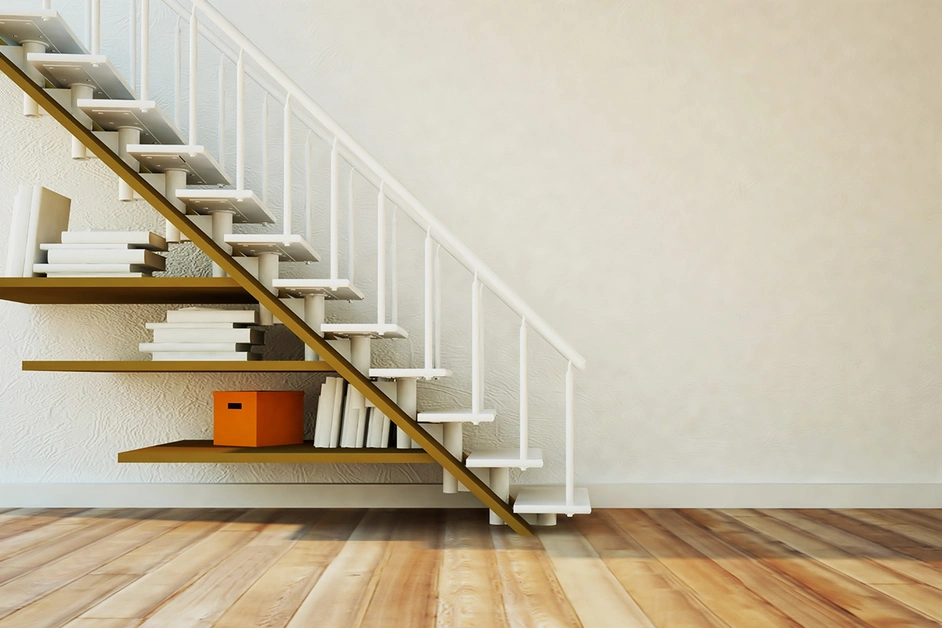
Utilizing the space under the staircase for storage is not only a practical solution but also aligns with Vastu principles. However, it's essential to maintain this area in an organized and clutter-free manner. A well-organized storage space under the staircase contributes to a positive and harmonious living environment.
Construction of Doors:
The construction and placement of doors near the staircase are additional considerations in Vastu. Doors should ideally open in a clockwise direction, aligning with the natural flow of energy. It's crucial to ensure that doors do not obstruct the path of the staircase, allowing for an uninterrupted flow of positive energy throughout the house.
Vastu Shastra Tips for Staircase
Staircases are considered significant as they are pathways for energy to move between different levels. Here are a few simple Vastu Shastra tips to consider:
- Direction matters: Ideally, staircases should spiral clockwise from top to bottom. This is believed to enhance positive energy flow.
- Location is key: It's recommended to avoid placing staircases in the centre of the house, as it may disrupt the flow of positive energy.
- Space and structure: Staircases should be well-lit and spacious. Avoid cramped or dark stairwells, as they could create a feeling of heaviness or restrict positive energy movement.
- Balustrades and railings: Ensure sturdy and well-maintained railings. This not only enhances safety but also contributes to a sense of stability in the house.
- Material matters: Wooden staircases are often preferred, as wood is believed to have grounding and natural energy-conducting properties.
Ideal Staircase Direction as per Vastu for Different House Directions
A staircase arrangement in a home holds significance due to its impact on energy flow and inhabitants' well-being. Here are five essential aspects:
Staircase in East-Facing House
It's recommended to have the staircase in the East or Southeast direction in an East-facing house as per Vastu. This promotes positive energy flow and aids in maintaining a balanced atmosphere within the house.
Staircase in West-Facing House
Placing the staircase in the Northwest or West direction is advised in a West-facing house as per Vastu. This positioning can help maintain a smooth flow of energy and enhance the overall ambience of the house.
Staircase in North-Facing House
Placing the staircase in the North or Northeast direction is considered auspicious for a North-facing house as per Vastu. This arrangement aids in channelling positive energies and ensuring a harmonious environment.
Staircase in South-Facing House
In a South-facing house as per Vastu, it's advisable to have the staircase in the South or Southwest direction. This positioning supports a balanced energy flow and contributes to the overall harmony of the living space.
Colours for Staircase as per Vastu Shastra
In Vastu, colours play a significant role in the energy flow within a home. The staircase is an essential element, and choosing the right Vastu colours can enhance the positive flow of energy.
Ideal Colours for Staircase:
- Earthy Tones: Think warm, neutral shades like brown, beige, or terracotta. These colours promote stability and grounding energy.
- Light Shades: Soft pastels like light blue, pale green, or subtle pink can create a serene and harmonious atmosphere.
Colours to Avoid:
- Dark and Gloomy colours: Avoid deep, dark shades like black, as they might absorb light and hinder the flow of positive energy.
- Overly Bright colours: Extremely vibrant and intense colours, like neon or bright red, can be overwhelming and disrupt the balance of energies.
Constructing Staircase as per Vastu: Do's and Don'ts
Do's:
When constructing a staircase, certain Vastu principles can be considered for better energy flow within the home.
- Location: Ideally, the staircase should be in the South, Southwest, or West direction of the house.
- Shape and Design: It's recommended to avoid circular or spiral staircases, favouring square or rectangular shapes.
- Number of Steps: Odd numbers for steps are considered auspicious in Vastu.
- Materials: Using wood or marble is favourable. Avoid using low-quality materials.
- Direction: The staircase should ascend from East to West or North to South.
- Placement: It's best to avoid positioning the staircase in the centre of the house to maintain the positive energy flow.
- Lighting: Ensure proper lighting, especially at the top and bottom of the staircase
Don'ts:
When constructing a staircase, according to Vastu, it's believed that the energy flow in a home can be affected. To align with Vastu principles, here are some things to avoid:
- Avoid Circular or Spiral Staircase: Vastu suggests using straight or square-shaped stairs to ensure smooth energy flow.
- Avoid Odd Number of Steps: Try to have an even number of steps to maintain balance and harmony in the house.
- Avoid Creaky or Broken Steps: Stairs should be in good condition to prevent negative energy accumulation.
- Avoid Stairs Facing the Main Entrance: Stairs facing the entrance can lead to energy loss, according to Vastu principles.
- Avoid Clutter Under the Stairs: Keep the space under the stairs clean and clutter-free to allow positive energy to circulate freely.
- No Direct View: The staircase shouldn't be directly visible from the main entrance.
Staircase Vastu Doshas
Vastu Shastra suggests several guidelines to ensure positive energy flow in a home, including considerations for staircases. Here are some common Vastu Doshas related to staircases:
- Direction: Staircases should ideally be in the South, West, or Southwest part of the house.
- Shape and Position: Avoid circular, spiral, or irregularly shaped staircases. They should not be in the centre of the house or too close to the main entrance.
- Number of Steps: Even numbers of steps are preferred, and odd numbers should be avoided.
- Construction: Stairs should be built in a clockwise direction and shouldn't creak or be broken.
- Storage: Avoid keeping heavy items or clutter under the staircase; instead, keep it clean and well-lit.
- Lighting: Ensure proper lighting on the staircase for safety and positive energy flow.
Remedies for Staircase Vastu Doshas
- Keep Stairs Well-Lit: Ensure good lighting on the staircase to dispel negative energy and promote a positive ambience.
- Avoid Broken or Creaky Steps: Promptly repair any broken or creaky steps, as damaged stairs are believed to bring obstacles and hindrances.
- Decorate with Positive Symbols: Adorn the staircase area with symbols of positivity, like potted plants or vibrant artwork, to counteract negative energy.
- Use Colors Wisely: Choose light and soothing colours for staircase walls to enhance a sense of calmness and balance in the home.
- Install Handrails for Support: Ensure sturdy handrails are in place for support and stability, promoting a secure and confident energy flow.
- Avoid Clutter on Stairs: Keep the staircase clutter-free, as a tidy space encourages the smooth flow of energy up and down.
- Place Crystals Strategically: Position crystals like amethyst or clear quartz on the staircase to counteract negative vibrations and invite positivity.
- Hang Positive Affirmations: Decorate the stairwell with positive affirmations or motivational quotes to uplift the energy in the space.
- Regular Cleansing Rituals: Engage in regular cleansing rituals like smudging with sage or using salt water to purify the staircase area.
- Introduce Greenery: Place indoor plants on the staircase landing to bring in natural vitality and counteract any negative influences
Different Staircase Shapes as per Vastu
In Vastu, the shape of your staircase plays a significant role in channelling energy within your home. Each staircase type brings a unique energy flow, impacting the overall harmony of your living space.
Winder Staircase
A Winder Staircase, curving or turning, should ideally ascend clockwise. Vastu suggests this shape promotes a smooth flow of energy, preventing any disruptions or stagnation as you ascend or descend.
Circular/Spiral Staircase
Circular or Spiral Staircases, with their graceful curves, should rotate in a clockwise direction for positive energy circulation. This shape symbolizes continuity and balance in your home's energetic dynamics.
Straight Flight Staircase
A Straight Flight Staircase, a simple and direct ascent, aligns with Vastu principles when it faces either the north or east direction. This placement encourages an unobstructed flow of energy.
U-Shaped Staircase
A U-Shaped Staircase, bending in the middle, is recommended to be constructed in a clockwise direction. This design fosters a harmonious and balanced energy flow within the space.
L-Shaped Dog-Legged Staircase
An L-Shaped Dog-Legged Staircase, forming a right angle, should ascend in a clockwise direction. Vastu suggests that this shape aids in maintaining a stable and positive energy environment in your home.
Posted By

Akshay Gupta
info@houssed.com
Akshay Gupta writes about lifestyle and modern living for Houssed, focusing on practical décor ideas and everyday comfort. His work offers simple guidance to help readers create functional and welcoming home environments.