

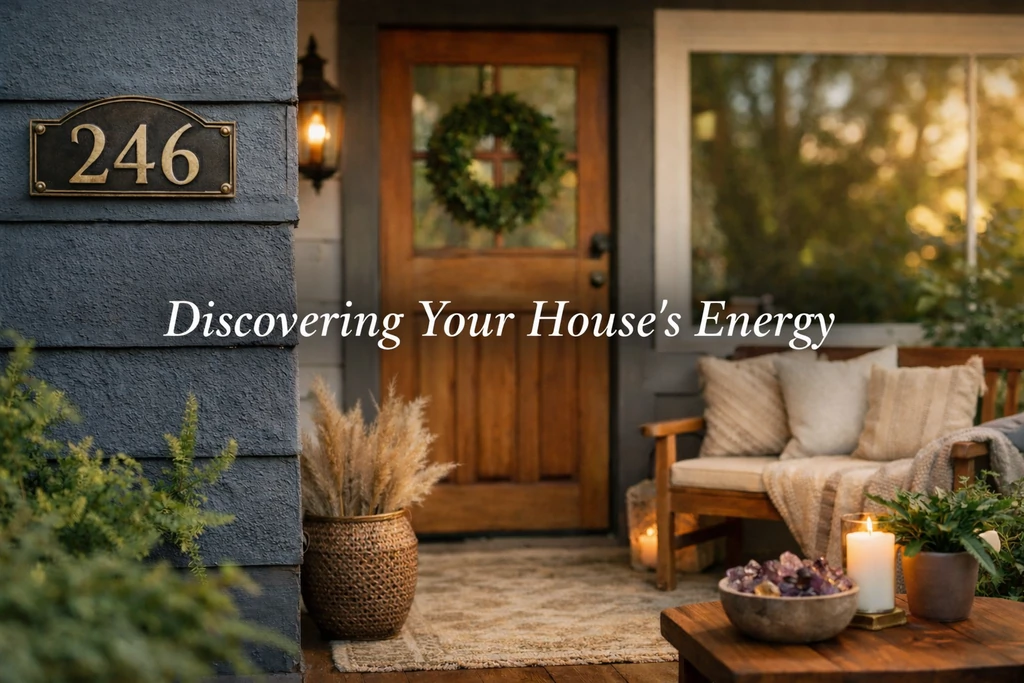
Have you ever walked into a home and instantly felt calm, inspired, or, without knowing why, slightly unsettled? While layout, light, and decor all play a role, some people believe there’s another, peaceful influence at work: home numerology.
It's centered on the idea that numbers carry specific energies and that the number of your house can shape the surroundings where you live. Whether you consider numerology as a spiritual guide or a perspective for self-reflection, understanding your house number can be a conscious way to align your home with how you want to feel day to day.
1. What Is Home Numerology?
It examines the spiritual meaning of your house number and how it can impact daily life. The theory is based on traditional numerology, which links themes like growth, harmony, and independence to the numbers 1 through 9 (and occasionally master numbers such as 11 or 22).
In numerology for the home, your house number is believed to affect:
- The mood of the space
- How people communicate inside it
- The kind of activities the home naturally supports
It doesn’t replace personal choice or effort, but some believe it sets a default “mood” for the family.
2. How to Calculate Your House Number
Take the entire block number of your home.
For instance: 246
Add the digits together:
2 + 4 + 6 = 12
Reduce to a single digit (unless it’s 11 or 22):
1 + 2 = 3
So, 246 becomes a 3 house.
If your total is 11 or 22, some traditions in numerology preserve these as they are, observing them as enhanced versions of 2 and 4.
3. What Each House Number Represents
House Number 1: Freedom & Fresh Starts
A 1 house often supports leadership, confidence, and fresh starts. It may feel energizing and self-directed. This number can suit people starting a new chapter, living alone, or focusing on personal goals.
Possible challenge: It may feel isolating if connection and warmth aren’t intentionally maintained.
House Number 2: Balance & Relationships
This home number is linked to cooperation, sensitivity, and emotional awareness. It often feels calm and supportive, making it suitable for couples or shared living.
Possible challenge: Avoidance of conflict can sometimes lead to unspoken stress.
House Number 3: Expression & Creativity
A 3 house is often related to communication, joy, and creative flow. It can feel lively and social, supporting hobbies, art, and conversation.
Possible challenge: The energy may feel chaotic if routines and peaceful time are neglected.
House Number 4: Stability & Structure
This number is connected to grounding, routine, and reliability. A 4-home often feels solid and practical, ideal for building long-term security.
Possible challenge: It can feel rigid or heavy without moments of play or flexibility.
House Number 5: Change & Movement
A 5 house is linked to freedom, adaptability, and variety. It may suit people who enjoy travel, new experiences, or dynamic lifestyles.
Possible challenge: The pace can feel restless if there’s no grounding influence.
House Number 6: Care & Responsibility
Often associated with nurturing and family life, a 6 home can feel warm and supportive. It’s commonly linked with caregiving, community, and harmony.
Possible challenge: Taking on too much responsibility for others can lead to burnout.
House Number 7: Reflection & Inner Life
A 7 house tends to support introspection, learning, and quiet focus. It may feel peaceful and private, appealing to those who value solitude.
Possible challenge: It can feel withdrawn or disconnected if balance isn’t maintained.
House Number 8: Ambition & Achievement
This number is often associated with confidence, material stability, and long-term goals. An 8 house may support career focus and personal authority.
Possible challenge: Life here can feel overly serious without room for rest or connection.
House Number 9: Compassion & Completion
A 9 house is linked to empathy, service, and letting go. It may feel emotionally rich and inclusive, often attracting people from different walks of life.
What About Apartments and Units?
If you live in an apartment, many people use the unit number instead of the building number for home numerology. Others consider the building as the broader energy and the unit as the personal layer.
There’s no single “right” method; what matters most is consistency and what feels meaningful to you.
Can you change or balance your home’s energy?
You can’t always change your house number, but in numerology for the home, balance is considered just as important as the number itself. Simple actions people often use include
- Adjusting lighting and colour
- Decluttering regularly
- Creating spaces for rest or activity, depending on what feels lacking
Think of the house number as a theme, and your choices as how that theme is expressed.
A Grounded Way to Look
Numerology isn’t a guarantee of happiness, success, or harmony. It’s a reflective framework, one that can encourage awareness of how your space supports your life.
Many people use it not to predict outcomes, but to ask better questions:
- Does my home support how I want to live right now?
- What kind of energy do I want more of here?
Those questions alone can lead to positive, practical changes.
Posted By

Akshay Gupta
info@houssed.com
Akshay Gupta writes about lifestyle and modern living for Houssed, focusing on practical décor ideas and everyday comfort. His work offers simple guidance to help readers create functional and welcoming home environments.