

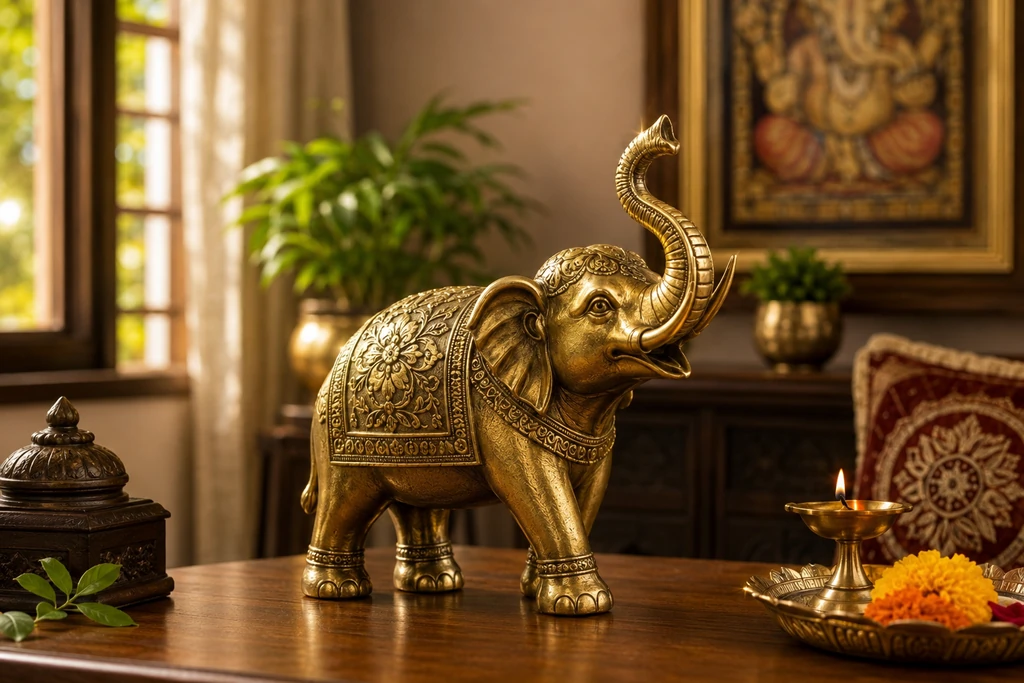
Walk into any home that takes Vastu seriously and you'll probably spot an elephant somewhere, maybe a pair guarding the entrance, or a single brass figure tucked into a study corner. It's one of those decor choices that looks simple on the surface but actually carries a fair bit of thought behind it once you understand the Vastu for home principles it draws from.
The short version: direction, material, and the way the trunk is positioned all change what the statue is supposed to do for your space. Get into the details below and you'll see why people are so particular about where exactly an elephant goes.
Why Elephants, Specifically?
Across Indian tradition and in Feng Shui alike, the elephant has always stood for something bigger than itself, intelligence, raw strength, loyalty, and in Indian households especially, a close tie to Lord Ganesha, the deity who clears obstacles and ushers in success. Feng Shui leans more into the nurturing, fortune-bringing side of the symbol, but the overlap is obvious.
People bring an elephant statue into their home expecting a handful of things: a boost to household wealth, a steadier sense of protection, sharper focus for kids studying or adults working from home, tighter family bonds, and for some, support around fertility and emotional nurturing.
So Where Should It Actually Go?
This is the part most people get wrong, they buy a beautiful statue and then just place it wherever looks good. Direction matters more than aesthetics here, so it's worth sorting this out first.
North is the direction ruled by Lord Kuber, the god of wealth, which makes it the go-to spot if you're hoping for career growth or a bit more financial breathing room. If you run a business or work mostly from home, this is probably your best bet.
East ties back to the sun and to family connection, so it's a solid choice for households where tempers run a little hot or relationships need some smoothing over.
Southeast is governed by fire, or Agni, and is generally treated as the wealth corner. A silver or gold-toned statue placed here is supposed to give that financial-stability effect an extra push.
Room-by-Room Placement
Beyond the compass direction, where in the house you place the statue changes what it's doing for you:
Near the main door or home entrance, it acts almost like a guardian, standing watch over the household's protection and prosperity. In the bedroom, a pair is meant to nurture love and unity between partners. In a child's room, it's there to support focus and academic growth. On a study desk or in a home office, the idea is sharper concentration and better decision-making. And tucked into a locker or safe, especially a small silver one wrapped in red cloth, it's specifically meant to support financial gain.
Should It Face the Door or the Window?
Here's a detail people often miss: which way the elephant is actually facing. The general rule is to have it face inward, toward the home, never out through a window or an open door. The thinking is that an outward-facing statue lets whatever positive energy it's drawing in just leak right back out. If you're placing a pair at the entrance, have them facing inward so they read as guardians welcoming good fortune in, not waving it goodbye.
Material, Trunk Position, and How Many to Keep
Once direction is sorted, the next layer is what the statue is made of and how it's posed.Metal statues tend to suit offices and entrances best, since they're associated with career strength and ambition. Wooden ones feel more at home in living rooms, particularly if you can tuck one into the southeast corner, and they lean into family stability rather than career. Ceramic or resin pieces are lighter, both literally and energetically, so they work well on bedroom shelves or anywhere you want something more understated.
Trunk position is one of those small details that actually changes the meaning quite a bit. A raised trunk is the classic choice, it's meant to signal good luck, prosperity, and a kind of victorious energy, and it's by far the most common posture you'll find in stores. A lowered trunk has a quieter meaning: calm, longevity, resilience. If you're setting up a meditation corner rather than a living room centerpiece, that's the one to go with.
Posture matters too. A standing elephant carries more active, ambitious energy, so it suits offices or busy parts of the home. A seated one is calmer and more grounded, better suited to bedrooms or a small prayer space.
And then there's the question of how many to keep. A single statue isn't a lesser choice by any means, it actually represents self-reliance and personal focus, which makes it a nice fit for a study desk or a personal workspace. If you're going for something more career-oriented specifically, a single metal or wooden elephant with its trunk raised, placed in the north, is generally considered the strongest combination you can put together.
A pair is the more traditional pick for entrances and bedrooms, since two elephants together symbolize love, unity, and loyalty. Some households go further and keep three, which is said to represent a peaceful family life and help smooth over conflict, usually placed somewhere shared, like a living room.
What Colour Should You Choose?
Colour is the last layer, and honestly the most fun to play with, since it lets you match the statue to whatever specific intention you have in mind rather than just picking what looks nice on the shelf.
Black works well for career-focused intentions and pairs naturally with the north direction, an office, or a study, usually in metal or stone. White leans toward peace and emotional healing, so it fits better in a southwest corner or a prayer room, typically in ceramic or resin. Gold is the wealth colour almost by default, and it's a natural match for the southeast corner or for that locker placement mentioned earlier. Brown or natural wood tones bring grounding and family stability, which is why they suit living rooms, dining areas, or again, that southeast corner. Blue is associated with focus and clear thinking, so a small blue elephant on a study table or east-facing desk makes sense. And red, tied to passion and intimacy, tends to go in the bedroom or southwest corner, ideally as a trunk-up pair.
A Few Questions People Usually Ask
Is it actually auspicious to keep an elephant statue at home? Yes, and most of the benefit really does come down to intention. A statue placed thoughtfully, with the right direction, material, and posture in mind, does more for the space than one that's just sitting there for decoration.
Can I just keep one? Definitely. A single elephant isn't a compromise, it's specifically associated with self-reliance and focus, and works particularly well for career goals when placed in the north with the trunk raised.
How many should I actually have? Two if you're after love and unity, especially near an entrance or in a bedroom. Three if you want to ease tension and bring more harmony into shared family spaces. There's no strict cap beyond that, but more isn't automatically better, intentional placement matters far more than quantity.
Quick Do's and Don'ts
Do place statues facing inward at the entrance, match the material and colour to whatever specific benefit you're after, and keep that silver-elephant-in-red-cloth trick in mind if you're aiming for financial gain through a locker placement.
Don't face a statue toward a window or an outward-opening door, don't overload a single space with too many colours or materials at once since it tends to muddy the effect, and don't treat placement as purely decorative when direction and posture both genuinely change what the statue is doing.
Bringing It All Together
None of this needs to be complicated. Pick a direction based on what you actually want more of in your life, whether that's career growth, family harmony, or a calmer home overall. Then let material, trunk position, and colour follow from there. Done with a bit of intention, an elephant statue stops being just decor and starts being a small, deliberate part of how your home is set up to support you.
Also read: Vastu Shastra guide for a north-facing house
Posted By

Akshay Gupta
info@houssed.com
Akshay Gupta writes about lifestyle and modern living for Houssed, focusing on practical décor ideas and everyday comfort. His work offers simple guidance to help readers create functional and welcoming home environments.