

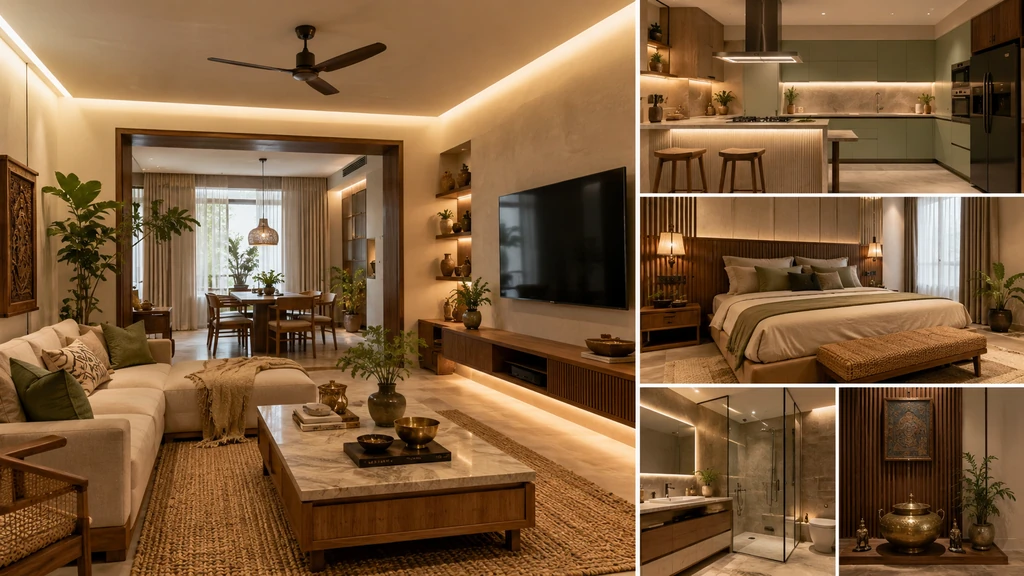
Interior design trends in India in 2026 reflect a clear shift toward comfort, efficiency, and thoughtful material choices. Homes across the country are evolving with purpose. Design is no longer about display. It focuses on layouts that support daily life, materials that age well, and spaces that feel calm rather than crowded.
Indian homeowners are adapting global influences to local climate, culture, and routines. The result is a balanced approach that blends contemporary form with familiar textures and finishes.
1. Warm Minimalism with Indian Character
Walls are often finished in warm neutrals like ivory, sand, or light taupe. Instead of plain plaster ceilings, designers add subtle cove lighting with concealed LED strips that wash light upward. This soft lighting reduces glare and suits Indian evenings.
Furniture silhouettes remain clean, but materials add richness. Wood laminates are preferred for cabinets. Cane-backed dining chairs, linen carpeting, and jute rugs introduce texture. Coffee tables often combine wood with stone tops.
Handcrafted accents play a role. Block-printed cushions, brass urli bowls, and handwoven dhurries bring identity without clutter. This balance defines many home decor trends in India, where restraint and heritage meet naturally.
2. Earthy and Nature-Based Color Palettes
Color choices are grounded and climate-sensitive. Living rooms often use layered beige tones paired with olive green cushions or terracotta ceramics. Bedrooms lean toward a calm, soft, greyish-green color, dusty blue, or warm grey. Accent colors are used minimally, often in textiles or artwork.
Wall finishes are changing. Lime plaster, textured paint, and clay-based finishes are chosen for their matte look and breathability. These surfaces diffuse light and hide minor imperfections, which is practical in Indian weather conditions.
Stone elements such as Kota flooring or sandstone cladding appear in entryways and balconies. Indoor plants, especially large-leaf varieties, are placed near windows to soften corners. Such choices reflect a grounded aesthetic within Indian interior design trends in 2026, where color supports mood.
3. Multi-Functional Living Spaces
Space efficiency is central, especially in cities like Mumbai, Bengaluru, and Delhi. Designers now plan every square foot carefully. Sofas often include storage drawers. TV units are designed with concealed shelves for routers and cables. Foldable study desks are integrated into wall panels. Sliding partitions made of fluted glass or wood slats allow privacy without blocking light.
In compact apartments, dining benches are built against walls to save circulation space. Wardrobes extend up to the ceiling to avoid dust-collecting gaps. These practical adjustments define many modern interior ideas emerging across urban India. Design decisions are based on daily habits rather than appearance alone.
Read Also: Space-Saving Interior Design Ideas for Comfortable Compact Homes
4. Sustainable and Local Materials
Sustainability is no longer limited to eco-conscious homeowners. It is becoming standard practice. Solid wood furniture from regional workshops is preferred over mass-produced particle board. Reclaimed wood is used for console tables and shelving. Bamboo pendant lights and rattan stools are widely seen.
Flooring choices include engineered wood, ceramic tile, and locally produced stone. Handmade tiles with minor irregularities add authenticity. Paints with low chemical content are increasingly chosen, especially in children’s rooms. Natural fabrics like cotton and linen dominate upholstery. This measured approach to sourcing is central to home decor trends in India in 2026, where durability and maintenance matter as much as style.
5. Smart Homes with Subtle Technology
Technology is integrated quietly. False ceilings conceal wiring for smart lighting and air-conditioning vents. Motion-sensor lights are installed in passageways and bathrooms. Digital locks are common in new apartments.
In high-end properties and luxury home interiors in India, automation systems manage lighting scenes, temperature, and curtains through mobile apps. However, visible gadgets are avoided. Panels are flush with walls, and speakers are concealed within ceilings. The design principle is clarity. Technology should support living, not dominate it.
Read Also: Budget-Friendly Interior Design Ideas for First-Time Homeowners
6. Textured Walls and Statement Surfaces
Walls now carry depth rather than bold color. Fluted wooden panels are popular behind television units. Microcement finishes create a smooth, stone-like texture suitable for modern living rooms. Upholstered headboards extend across entire bedroom walls, offering comfort and sound absorption.
In dining areas, designers often add vertical wooden battens or fabric panels to soften acoustics. Decorative mouldings return in subtle forms, painted in the same shade as the wall for quiet detail. Among refined interior design styles in India, textured surfaces allow interest without heavy decoration.
7. Open Kitchens with Defined Zones
Open kitchens continue to evolve with a clearer structure. Kitchen islands are more functional than decorative. They often include induction cooktops or additional storage. Breakfast counters are slightly elevated, visually separating cooking from dining.
Cabinets are matte finished in beige, sage green, charcoal, or muted blue. Without handles, shutters with carved profiles create a seamless look. Granite countertops remain popular for durability.
Glass partitions with slim black frames are used to hold cooking smells without blocking light. Under-cabinet lighting improves task visibility. These layouts reflect practical planning within the trends of interior design in India in 2026, especially in new developments.
8. Layered Lighting Design
Lighting plays a key role. Homes now use three levels of lighting: ambient, task, and accent. Cove lighting provides general brightness. Pendant lights hang over dining tables or kitchen areas. Wall lamps highlight artwork.
Warm white lighting is preferred for living areas, while neutral white works for kitchens and study zones. Dimmer systems allow mood changes throughout the day.
Floor lamps with fabric shades add warmth to corners. Staircases often include concealed strip lights along treads for safety and style. Layered lighting supports comfort and enhances the materials used throughout modern interior ideas.
9. Spa-Inspired Washrooms
Washrooms are shifting toward calm, hotel-like environments. Large-format tiles reduce tile lines and create visual continuity; neutral shades like stone grey, beige, and soft white dominate. Floating vanities with under-lighting add lightness. Unframed glass shower walls make small bathrooms feel larger. Matte black or brushed brass fittings are preferred over chrome.
LED mirrors and wall niches for toiletries improve usability. Natural stone countertops and indoor plants add warmth. This approach aligns with growing interest in wellness-focused luxury home interiors in India, where bathrooms are designed for relaxation rather than only for function.
Read Also: 18 Bedroom Design Ideas for Stylish & Comfortable Interiors
10. Personalised Corners and Art Displays
Homes now include dedicated corners that reflect personality. Reading spots near windows feature built-in benches and soft cushions. Music rooms or compact prayer areas are integrated thoughtfully. Gallery walls display family photographs or curated art pieces.
Rather than stocking shelves at random, homeowners select fewer but significant items. Open shelving is balanced with closed cabinets to maintain order. These choices add personality while respecting the broader direction of trends in interior design in India in 2026. Design becomes more intimate and less decorative.
Final Thoughts
The direction of interior design trends in India in 2026 is steady and grounded. Materials are natural. Layouts are flexible. Technology is subtle. Colors are calm.
Homes are being shaped around daily life rather than a trend that lasts. The emphasis is on comfort, longevity, and thoughtful planning. As homeowners continue to invest in better living environments, these shifts will likely define residential spaces across metros and emerging cities alike.
Posted By
Saria George
info@houssed.com
Saria George is a home décor writer at Houssed who focuses on interior design, décor trends, furniture, and practical ideas for modern living spaces. Her work highlights simple design choices that balance comfort, functionality, and aesthetics.