

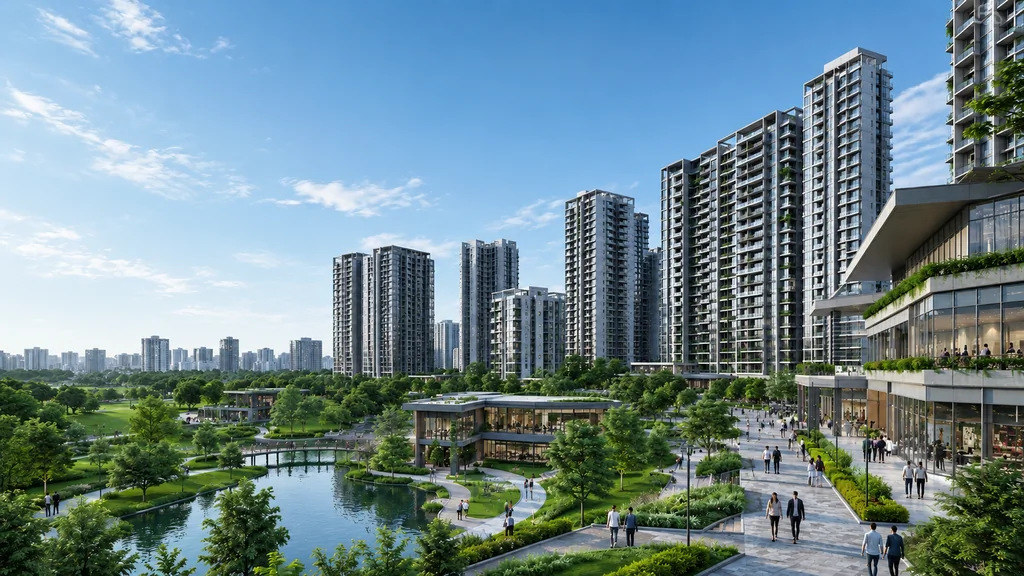
Urban India is evolving rapidly, and Tata Realty projects are increasingly being discussed in the context of how modern cities should grow. As homebuyers look for better infrastructure, balanced lifestyles, and long-term value, integrated townships have emerged as a thoughtful response to changing urban needs.
Tata Realty’s approach to urban development looks at how a neighbourhood actually functions. Where do people work? How far do they travel? Where do they unwind? This people-first way of thinking is shaping its approach to integrated townships and urban development.
1. Integrated Township Development
An integrated township is designed as a self-sustained urban environment. It connects residences, offices, retail, open spaces, schools, healthcare, and leisure within a single master plan. The idea is to reduce daily travel, improve quality of life, and create communities that function efficiently.
In the context of township projects in India, this model has gained relevance as cities struggle with congestion, infrastructure gaps, and uneven growth. Tata Realty’s approach aligns with this broader need for planning developments that consider mobility, utilities, and social interaction from the start.
Planning-First Philosophy
One of the defining aspects of Tata Realty’s urban development strategy is its focus on master planning. Instead of parcel-by-parcel construction, the emphasis is on understanding land potential, environmental context, and future growth patterns. This often results in developments that feel less crowded and more organised, even as they grow in scale.
Open spaces, road networks, and utility corridors are designed early in the process. This reduces long-term disruptions and helps maintain liveability as populations increase. Such an approach is particularly important in large township projects in India, where developments may evolve over a decade or more.
2. Balancing Residential, Commercial, and Social Spaces
Integrated townships work best when different functions complement each other. Tata Realty’s developments typically aim for this balance by combining residential zones with commercial and social infrastructure. Offices and retail areas are positioned to support employment close to home, while schools, healthcare facilities, and community spaces add everyday convenience.
This integrated thinking extends to residential developments as well. Housing options are often planned to cater to diverse needs, from compact apartments to larger family homes, allowing communities to be more inclusive and adaptable over time.
Sustainability as a Practical Choice
Rather than treating sustainability as a branding exercise, Tata Realty tends to approach it as a functional necessity. Water management, energy efficiency, and waste handling are built into the planning process. Features such as rainwater harvesting, green building standards, and landscaped open areas are designed to reduce environmental impact and improve long-term operational efficiency.
In large urban developments, these measures are not just environmentally responsible; they also make economic sense by lowering maintenance costs and improving resilience. This practical view of sustainability has become increasingly relevant as buyers and city authorities pay closer attention to environmental performance.
Also Read: How Lodha Group Is Steering Through Market Volatility in 2026
Building Trust Through Consistency
In an industry where delivery timelines and quality can vary widely, consistency matters. Over time, Tata Realty has built a reputation that places it among the trusted builders in India, largely due to its adherence to governance standards and transparent processes.
For homebuyers and investors alike, this reliability often becomes a deciding factor, especially in large, long-term developments where patience and confidence in the developer are essential.
3. Responding to Changing Urban Lifestyles
Urban lifestyles are evolving, with greater emphasis on wellness, work-life balance, and community engagement. Tata Realty’s integrated developments increasingly reflect these shifts through pedestrian-friendly layouts, recreational amenities, and shared spaces that encourage interaction.
The design of residential developments within these townships often prioritises natural light, ventilation, and access to green areas. These elements may seem subtle, but they significantly influence everyday living experiences over time.
Long-Term Urban Impact
What sets integrated townships apart is their ability to shape entire micro-markets. Well-planned developments can improve surrounding infrastructure, attract businesses, and create employment opportunities. Tata Realty projects often aim to contribute positively to their wider urban context rather than exist as isolated enclaves.
This broader perspective is important in a country where urban growth needs to be managed carefully. As more township projects in India emerge, the emphasis on planning, sustainability, and community-building will likely determine their long-term success.
Measured Approach to Growth
Tata Realty’s strategy does not rely on aggressive expansion or exaggerated claims. Instead, it focuses on thoughtful growth, partnerships, and alignment with long-term urban needs. This measured approach positions the company alongside other trusted builders in India who prioritise durability and responsibility over speed.
Final Thought
Integrated townships are no longer a niche concept; they are becoming a practical response to India’s urban challenges. Through careful planning, balanced land use, and attention to sustainability, Tata Realty projects demonstrate how large-scale developments can remain human-centric. Without overstating impact or making sweeping promises, Tata Realty’s approach offers a clear example of how integrated urban development can support more organised, liveable cities for the future.
Posted By

Siddharth Jangam
info@houssed.com
Siddharth Jangam contributes to the Guides section at Houssed and works as a Digital Media Specialist focused on SEO and social media marketing. He shares insights that help readers understand India’s real estate market and buyer behavior.