

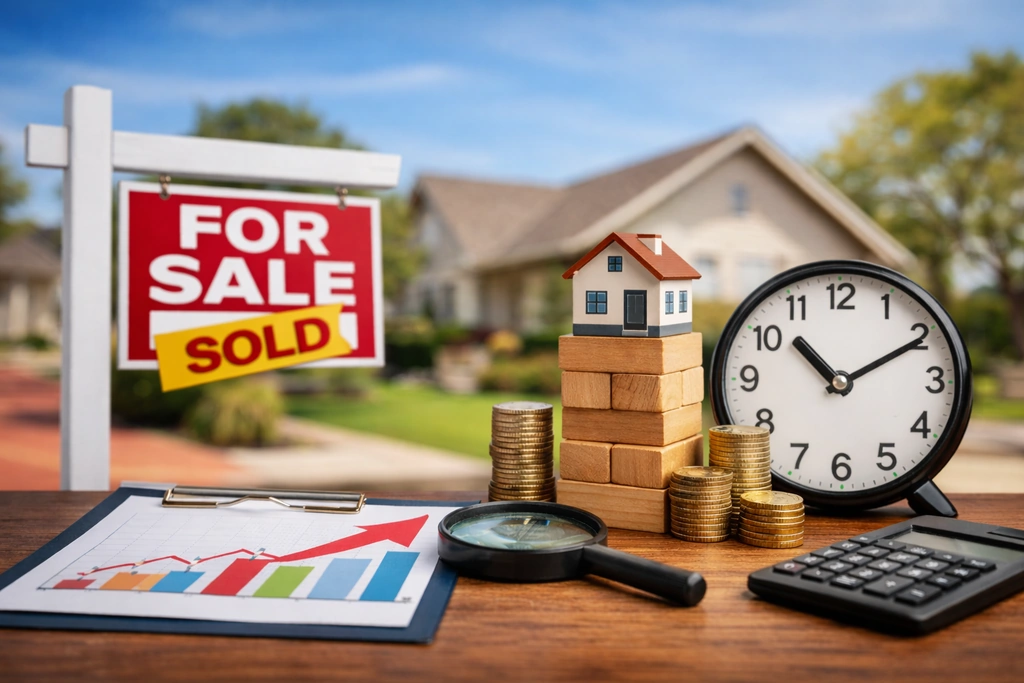
If you’re asking, should I sell now or wait? You’re already ahead of most sellers. The worst sellers don’t ask; they assume. And assumptions are expensive in real estate.
Let’s be clear: there’s no universally perfect time to sell. Anyone who tells you otherwise is either clueless or selling you something. The real question is whether waiting actually improves your outcome or just delays a decision while the market moves without you.
1. Why “Waiting” Feels Safer But Often Isn’t
Most homeowners delay selling for emotional reasons, not rational ones. Common thought patterns include:
- Prices might go higher
- I’ll wait until rates drop
- Spring is always better
- The market feels uncertain.
Here’s the harsh reality: markets criticize hesitation more than action. While you wait, three things usually happen:
- More competing listings enter the market
- Buyers become pickier
- Price momentum slows before headlines admit it
- By the time “certainty” appears, opportunity is already gone.
The Data That Actually Matters
Stop obsessing over national headlines. What matters is local, current data specifically:
Days on Market (DOM)
If homes in your area are selling faster than last year, demand is still strong. Rising DOM is an early warning sign that buyers are pulling back.
Sale-to-List Price Ratio
Are homes selling at, above, or below asking price?
The above list is useful for sellers
Below list = negotiation power shifting to buyers
This metric changes before prices drop.
Inventory Trends
Low inventory favors sellers. But watch the direction, not the number. If inventory is climbing month over month, waiting rarely helps.
If you don’t know these three numbers for your neighborhood, you’re not deciding; you’re guessing.
When Selling Now Makes More Sense
- You should strongly consider selling now if:
- You already have meaningful equity
- Comparable homes are still selling quickly
- You’d have to compete with new construction later
- Your home needs updates you don’t want to fund
Selling earlier often costs more than selling at a slightly higher price later, once carrying costs, price cuts, and concessions are factored in. Waiting for a peak is how people end up chasing the market down.
2. When Waiting Is Actually Smart
Waiting can be reasonable but only under specific conditions:
- You’re not financially or emotionally pressured
- Your local inventory is shrinking
- Your home will materially improve in value with a specific upgrade
- You plan to hold long enough to offset short-term volatility
Waiting only works when there’s a clear catalyst, not wishful thinking.
Also Read: Essential Documents To Sell Your Home in India (2025)
3. The Misconception of the “Perfect” Market
Many sellers delay because they want:
- Higher prices
- Lower rates
- Fewer competing listings
- That market almost never exists.
Every strong seller market comes with tradeoffs, usually buyer skepticism or affordability constraints. The best sellers don’t wait for perfect conditions; they sell when conditions are good enough and competition is manageable.
A Smarter Way to Decide
Ask yourself these three questions:
- If prices stayed flat for the next year, would selling now still make sense?
- If you had to reduce your price by 5% later, would you regret not selling sooner?
- Are you waiting for data or for reassurance?
If your answers reveal hesitation without evidence, waiting is likely costing you money. The question isn’t “Will prices go up? The question is, “Does waiting improve my net outcome?” For many sellers, the honest answer is no.
Posted By

Siddharth Jangam
info@houssed.com
Siddharth Jangam contributes to the Guides section at Houssed and works as a Digital Media Specialist focused on SEO and social media marketing. He shares insights that help readers understand India’s real estate market and buyer behavior.