

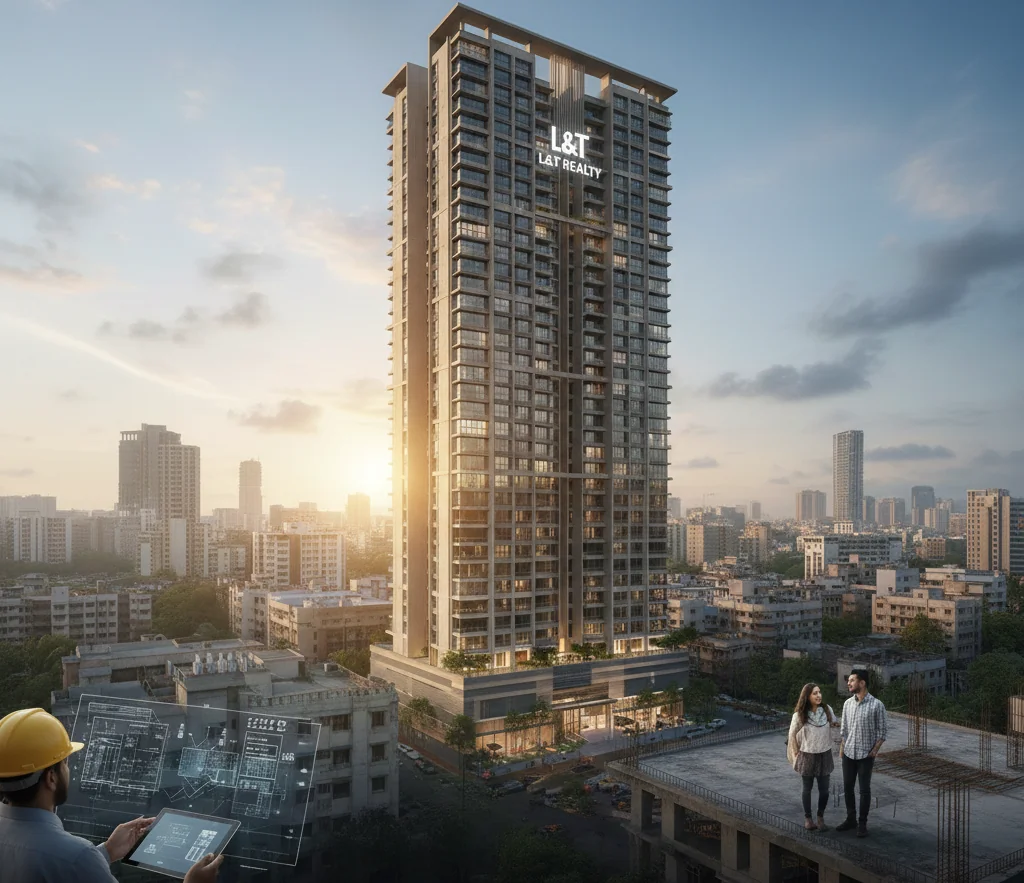
Buying a home in India isn’t always effortless. People have faced project delays, poor construction, and apartments that don’t align with their expectations, especially in cities. It’s no surprise that buyers hesitate. Within this context, L&T Realty is often in the conversations not because of heavy marketing, but because of what many buyers describe as L&T Realty engineering excellence grounded in an infrastructure-driven heritage.
The question that arises is not whether the brand is trusted, but whether an infrastructure-focused mindset really leads to better property experiences for buyers and investors. This difference matters in cities where buildings are pushed to their structural and regulatory
1. Engineering Background vs Typical Developer Approach
Most real estate developers rely on a model that involves land acquisition and sale. Engineering decisions are frequently outsourced, value-engineered, or revised midway to manage costs. L&T Realty follows a noticeably different structure, rooted in the parent group’s infrastructure and construction legacy. L&T Realty follows a noticeably different structure, rooted in the parent group’s infrastructure and construction legacy.
This shows up early in the project lifecycle. Soil investigation, foundation planning, and load calculations tend to be locked before launch rather than adjusted on-site. While this approach slows down pre-construction timelines, it reduces execution surprises later, a trade-off many developers avoid but one that often benefits end users.
This process-driven mindset is where L&T Realty engineering excellence becomes relevant, not as a slogan, but as a structural methodology.
Why This Matters in High-Density Cities
In markets like Mumbai, engineering is not a background function; it is the core risk variable. Limited land supply, aging surrounding structures, coastal soil conditions, and vertical construction all magnify the consequences of poor technical planning.
For buyers evaluating property in Mumbai, construction quality is often difficult to judge at the launch stage. What can be assessed instead is a developer’s execution history and technical depth. Projects built with stronger structural margins tend to show fewer long-term issues related to seepage, cracks, or uneven settlement problems that plague many mid-income and even premium developments.
L&T Realty’s emphasis on structural planning directly addresses these urban risks, even if it doesn’t always translate into lower prices or faster launches.
2. Functional Construction Technology
Unlike developers who prioritize visible luxury upgrades, L&T Realty’s focus leans toward construction systems and project controls. Use of precast elements, advanced formwork systems, and digital monitoring tools improves consistency across large projects.
This doesn’t automatically make homes “better designed” aesthetically, a common misconception. In fact, some critics argue that L&T projects can feel conservative in layout innovation. But from a durability and delivery standpoint, the trade-off is clear: fewer variations, tighter quality control, and more predictable timelines.
This operational discipline is a key reason the brand is often grouped among the top builders in Mumbai, even without aggressive branding campaigns.
3. Practical Sustainability
Ecological commitments are effortless to make and difficult to demonstrate. In L&T Realty’s scenario, sustainability tends to be built-in at a systems level rather than showcased through surface features.
Conservation of energy, water management, and construction durability are prioritized during design coordination. While this may not appeal to buyers looking for visible “green” branding, it has a tangible impact on long-term operating costs and building performance.
From a buyer’s perspective, it matters more than certifications that don’t translate into monthly savings or improved comfort.
4. Limitations Worth Acknowledging
An engineering-heavy approach is not without drawbacks. An engineering-heavy approach is not without drawbacks. L&T Realty projects are hardly the most affordable in their micro-markets. Decision-making phases and institutional processes can minimize flexibility, especially when juxtaposed to new developers who can personalize faster or respond quickly to buyer feedback.
Additionally, the brand’s cautious execution style means it doesn’t chase speculative locations aggressively. For investors seeking rapid appreciation in emerging pockets, this conservatism may feel limiting.
5. So who does this approach actually suit?
L&T Realty continues to attract more end-users and long-term holders than short-cycle investors. Buyers who emphasize structural reliability, operational reliability, and lower future maintenance risk are more likely to see value here.
For anyone assessing property in Mumbai, especially in redevelopment zones or high-rise formats, engineering capability is not a luxury; it's insurance. And that’s where L&T Realty’s real differentiation lies.
Final Perspective
Stripped of branding and reputation, L&T Realty’s edge is simple: it treats real estate as a technical product, not just a financial one. In a sector dominated by sales narratives, that discipline doesn’t always look exciting, but it often proves durable.
Whether that durability is worth the expense depends on buyer preferences. What’s clear is that engineering-led development offers a counterpoint to how Indian real estate has generally operated, and that alone makes it worth examining critically, not blindly celebrating.
Posted By

Siddharth Jangam
info@houssed.com
Siddharth Jangam contributes to the Guides section at Houssed and works as a Digital Media Specialist focused on SEO and social media marketing. He shares insights that help readers understand India’s real estate market and buyer behavior.