

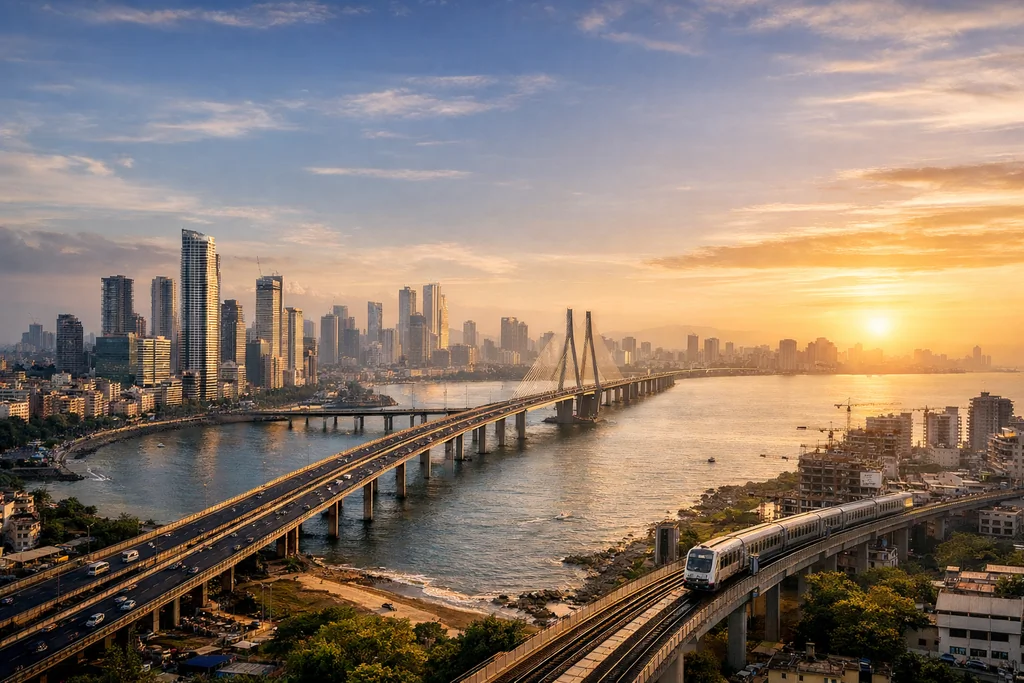
Property rates in Mumbai in 2026 reflect a market that has regained momentum after several years of recalibration. Demand remains steady across mid-segment housing, while luxury and ultra-premium properties continue to command record-breaking prices. Infrastructure upgrades, metro expansion, and redevelopment projects are influencing how prices are structured across the city.
For buyers and investors, understanding Mumbai property prices in 2026 requires a closer look at micro-markets, price ranges, and supply pipelines. Rates vary sharply between South Mumbai, the Western Suburbs, Central Mumbai, and extended regions such as Navi Mumbai and Thane.
Mumbai Property Prices 2026: City Overview
The average property price per sq ft in Mumbai in 2026 ranges between ₹18,000 and ₹45,000, depending on the locality. Ultra-luxury developments in prime sea-facing zones exceed ₹70,000 per sq ft.
Key observations in 2026:
- Strong demand for 2- and 3-BHK apartments
- Redevelopment projects driving supply in established suburbs
- Premium launches concentrated in South Mumbai and Bandra
- Metro connectivity is improving price stability in extended suburbs
Area-Wise Property Price Per Sq Ft in Mumbai
South Mumbai
Localities like Malabar Hill, Cuffe Parade, and Nariman Point are still the most expensive residential locations.
- Average Flat price in Mumbai: ₹45,000 to ₹75,000 per sq ft
- Premium sea-facing residences cross ₹1 lakh per sq ft
- Limited land availability keeps supply tight
For context on evolving luxury and premium launches, you can also check out the Top Residential Projects to See in Mumbai in 2026, which outlines flagship developments shaping this segment.
Western Suburbs
The Western corridor continues to see consistent traction. Micro-markets like Bandra, Andheri, Goregaon, and Borivali offer a mix of mid-segment and premium supplies.
- Bandra: ₹40,000 to ₹65,000 per sq ft
- Andheri: ₹22,000 to ₹38,000 per sq ft
- Goregaon: ₹20,000 to ₹32,000 per sq ft
- Borivali: ₹18,000 to ₹28,000 per sq ft
Metro connectivity and proximity to commercial hubs continue to influence flat rates in Mumbai across this belt.
Central Mumbai
Areas like Dadar, Worli, and Lower Parel are driven largely by redevelopment and luxury towers.
- Worli: ₹45,000 to ₹70,000 per sq ft
- Lower Parel: ₹35,000 to ₹55,000 per sq ft
- Dadar: ₹28,000 to ₹45,000 per sq ft
Redevelopment of old buildings into high-rise towers has reshaped pricing benchmarks in these areas.
Navi Mumbai and Extended Areas
Planned infrastructure and comparatively lower entry prices attract first-time buyers.
Key areas include Vashi, Kharghar, and Panvel.
- Vashi: ₹14,000 to ₹22,000 per sq ft
- Kharghar: ₹10,000 to ₹18,000 per sq ft
- Panvel: ₹7,000 to ₹14,000 per sq ft
Large residential developments and upcoming infrastructure are steadily increasing property rates in Mumbai in 2026 across these corridors.
Factors Influencing Property Rates in 2026
1. Infrastructure Expansion
The Mumbai Metro network, coastal road developments, and trans-harbor links are altering travel patterns. Improved connectivity directly influences property price per sq ft in Mumbai, particularly in peripheral zones.
2. Redevelopment Projects
A significant portion of the supply in the city now comes from redevelopment. Older buildings in prime areas are being replaced with high-rise towers that command premium pricing.
3. Demand from End Users
The market is currently driven more by genuine homebuyers than investors. Families prefer larger configurations and integrated amenities.
4. Interest Rate Movements
Stability in home loan rates has supported purchasing decisions. Even marginal rate shifts impact affordability in high-value markets such as Mumbai.
Also Read: Best Locations to Buy Property in Mumbai
Real Estate Trends in Mumbai 2026
Several broader real estate trends in Mumbai define the year:
- Growing demand for gated communities
- Preference for ready-to-move inventory
- Increased interest in 2.5 and 3 BHK layouts
- Continued rise in luxury and ultra-luxury launches
While premium housing grabs headlines, mid-income housing remains the backbone of transaction volumes.
Comparison with 2025:
- Prices have appreciated between 5% and 10% in most micro-markets
- Luxury zones have seen sharper spikes, especially in Worli and Bandra
- Extended suburbs show gradual but steady growth
The rise is measured and supported by infrastructure and genuine housing demand rather than speculation.
Is 2026 a Good Year to Invest?
For long-term buyers, the current phase offers relative stability. Inventory levels are balanced, and large-scale infrastructure projects are progressing.
Investors looking for appreciation may consider:
- Metro-connected suburbs
- Redevelopment-heavy localities
- Emerging hubs in Navi Mumbai
For end-users, buying decisions should focus on connectivity, developer credibility, and long-term livability rather than short-term price movement.
Posted By

Keerthi Choxsi
info@houssed.com
Keerthi Choxsi writes about property law and real estate regulations for Houssed. She explains legal frameworks, documentation requirements, and ownership rights to help buyers and investors understand property laws in India.